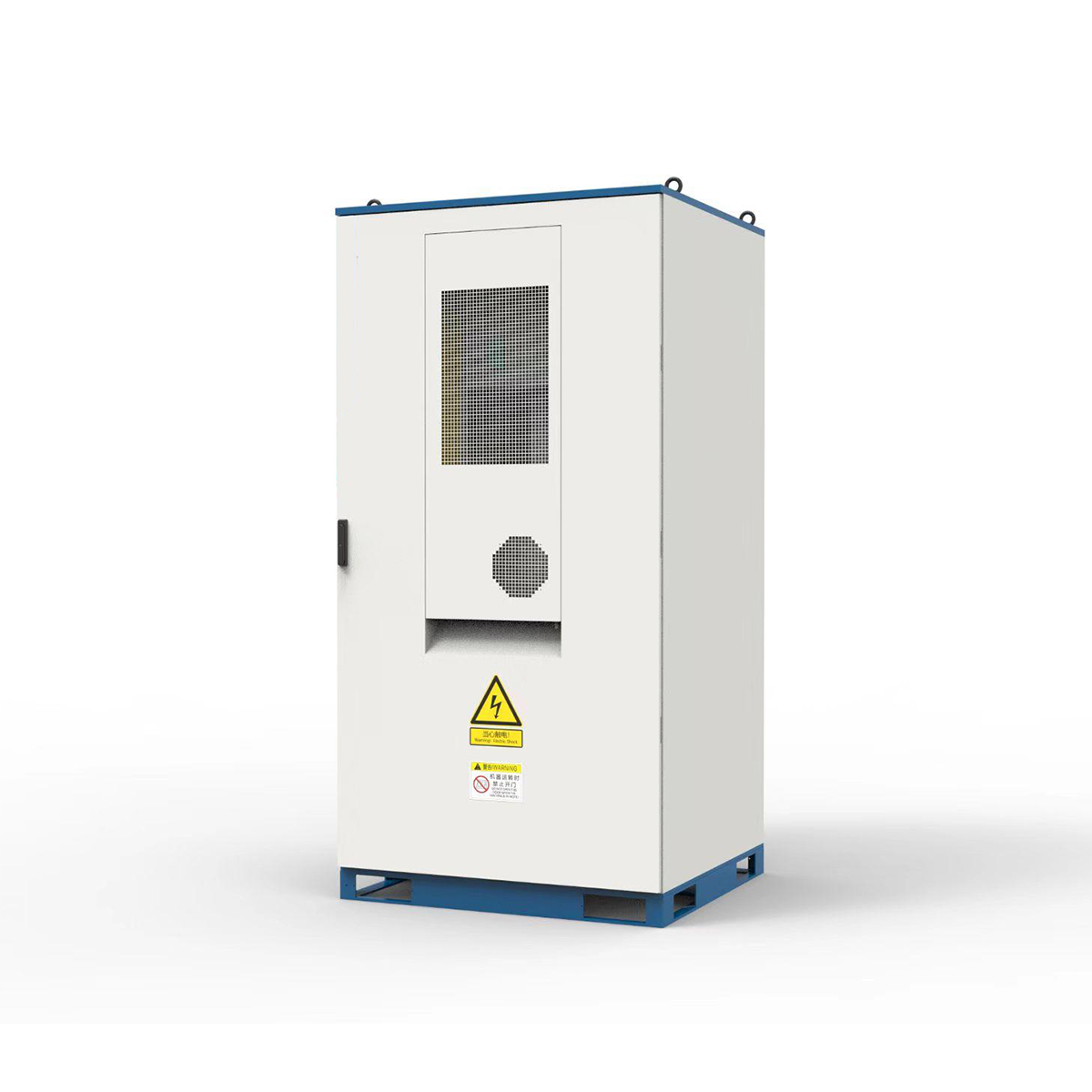
Grid interconnect delays throttle industrial growth today. Automated manufacturing and intensive workloads require unprecedented power density. Facilities face rapidly escalating energy demands. Waiting for utility upgrades often takes years. This reality forces infrastructure leads to seek immediate alternatives. A commercial-grade battery energy storage system provides a clear path forward. It is no longer just a sustainable alternative to diesel generators. It serves as a strategic necessity. Facilities use it to bypass grid constraints entirely. They ensure strict operational uptime and manage volatile energy costs. This guide breaks down essential operational applications. We explore crucial structural evaluation criteria. Facility managers will discover practical implementation realities. You will learn how to navigate compliance frameworks efficiently. Infrastructure leads will understand precisely how to select reliable vendor solutions.
Key Takeaways
**Speed-to-Power:** BESS deployments can significantly shorten the time-to-market for new data centers and factories compared to waiting for utility grid upgrades.
**Cost Control:** Advanced load-shifting and peak shaving directly impact the bottom line by reducing peak demand charges.
**Risk Mitigation:** Successful deployment requires navigating strict fire safety compliance (e.g., NFPA 855), complex Power Purchase Agreements (PPAs), and precise battery chemistry selection.
**System Integration:** Maximum ROI relies on the seamless integration of energy management software (EMS) with site-level hardware.
The Business Case: Why C&I Facilities Are Bypassing Traditional Grid Constraints
Utilities struggle to maintain aging grid infrastructure. Multi-year wait times for capacity upgrades plague new industrial developments. Grid volatility threatens consistent power delivery across all sectors. Enterprises can no longer rely on passive energy consumption. We need active grid participation. Integrating a Commercial & Industrial Energy Storage System (C&I ESS) answers this critical need. It transforms passive energy consumers into dynamic market participants.
You must establish measurable outcomes to justify the capital investment. Operators track these metrics continuously to ensure project viability. Key success criteria include:
Levelized Cost of Storage (LCOS): Evaluating the per-kilowatt-hour cost over the system lifespan.
Uptime Metrics: Guaranteeing seamless transition during grid voltage sags or complete outages.
Peak Tariff Reduction: Measuring the exact dollar amount saved by avoiding utility demand charges.
Cycle Efficiency: Monitoring round-trip efficiency during daily charge and discharge cycles.
Financial structures dictate the ultimate deployment strategy. The CapEx funding model requires significant upfront capital. It offers much higher long-term returns and total asset control. Alternatively, the Energy-as-a-Service (EaaS) model removes steep upfront costs. Providers install, operate, and maintain the hardware. You pay a predictable monthly rate based on delivered performance. This allows rapid deployment without exhausting capital budgets.
Core Applications in Manufacturing and Heavy Industry
Manufacturing facilities draw massive power during production cycles. Facility managers leverage battery energy storage systems for several critical applications.
Peak Demand Shaving: Energy-intensive manufacturing often incurs massive utility demand charges. You utilize stored energy during utility peak hours. This drastically reduces high-tariff demand penalties. The facility pulls from batteries instead of the expensive grid.
Power Quality and Microgrid Resilience: Automated assembly lines are highly sensitive to electrical fluctuations. Micro-outages and voltage sags disrupt sensitive production equipment. Power quality management prevents these expensive disruptions. It ensures smooth microgrid resilience. Operators keep automated lines running smoothly during grid instability.
Renewables Integration: Corporate sustainability mandates drive aggressive renewable energy adoption. Facilities couple storage hardware alongside a Solar Storage Inverter. This setup captures on-site solar generation efficiently. You dispatch this clean energy precisely when needed. It supports strict ESG mandates and ensures long-term cost predictability.
Energy Arbitrage: Markets exhibit significant energy price fluctuations throughout the day. Energy arbitrage maximizes these daily market fluctuations. You store off-peak power overnight when rates are lowest. You discharge it during high-cost afternoon periods. Time-of-use optimization leverages these tariff differences effectively.
These applications work synergistically. You do not have to choose just one function. A sophisticated energy management system handles multiple tasks simultaneously. It balances peak shaving priorities while managing solar integration. This multi-use strategy maximizes the return on your capital investment.
Transforming Data Center and AI Factory Architecture
High-density GPU clusters require continuous, massive power draw. The AI power dilemma challenges traditional grid capabilities globally. Conventional utility setups fail to meet these extreme computing loads. New data centers face unprecedented power density requirements.
Traditional Uninterruptible Power Supplies (UPS) fall dangerously short today. They only provide seconds of emergency backup. They merely bridge the gap until diesel generators spin up. They cannot manage long-duration grid interactions. Modern computing loads require robust, intelligent alternatives. A battery energy storage system acts as a critical Basic Data Center Infrastructure Solution. It bridges the crucial gap between emergency backup and active energy management.
Speed-to-power strategies accelerate commercial deployment. Facility construction often finishes long before final grid energization. Utility transformers frequently face massive supply chain backlogs. Battery storage bridges this critical timeline gap. Facilities can deploy localized microgrids immediately. Data centers go live months ahead of utility schedules. They generate revenue while competitors wait for utility permissions.
Grid services offer highly lucrative revenue streams. Facilities monetize idle battery capacity effortlessly. They participate in regional grid frequency regulation markets. The system injects or absorbs power instantly to balance grid frequency. Demand response programs also compensate operators generously. You receive payments for shifting loads during severe grid stress events. This transforms idle backup hardware into an active revenue center.
Technical Evaluation: Selecting the Right System Architecture
Choosing the right battery chemistry is absolutely critical. Lithium Iron Phosphate (LFP) offers superior safety and operational longevity. Nickel Manganese Cobalt (NMC) provides higher energy footprint density. You must address thermal runaway risks objectively during procurement. LFP demonstrates significantly higher thermal stability under stress. NMC requires aggressive, redundant thermal management systems.
The following comparison chart outlines the fundamental differences between major cell chemistries used in commercial systems:
Chemistry Type
Energy Density
Thermal Stability
Cycle Life Limit
Primary Use Case
Lithium Iron Phosphate (LFP)
Moderate
Excellent
6,000 - 8,000 cycles
Daily load shifting, peak shaving
Nickel Manganese Cobalt (NMC)
High
Moderate
3,000 - 5,000 cycles
Space-constrained environments
Mega-watt class systems present highly unique engineering challenges. They require advanced, multi-stage cooling mechanisms. Engineering tolerances remain exceptionally strict at this scale. Safety protocols vastly exceed standard residential requirements. This architecture is exponentially more complex than a standard Home Energy Storage System (HESS). Commercial systems demand dedicated fire suppression and industrial-grade enclosures.
Software ultimately drives all operational efficiency. The Energy Management System (EMS) dictates system performance daily. Integrating a Smart Energy Meter enables granular site monitoring. It provides real-time predictive analytics to facility managers. Operators track state-of-health (SOH) continuously across all battery modules. The system automates load dispatching based on real-time grid data. Intelligent telemetry ensures you extract maximum value from the physical hardware.
Implementation Realities: Compliance, Safety, and Rollout Risks
Regulatory frameworks complicate deployments if not managed proactively. Local zoning laws often restrict large system placements. You must secure permits well in advance. Environmental regulations demand rigorous impact studies. Interconnect agreements dictate precise grid interaction limits. Utilities require detailed engineering studies before granting permission to operate.
Fire safety remains the paramount concern. Strict adherence to NFPA 855 is non-negotiable. Systems must pass rigorous UL 9540 and UL 9540A cell-level testing. These standards evaluate fire propagation risks objectively. Thermal management dictates your overall system layout. Liquid cooling offers precise, uniform temperature control. HVAC systems provide simpler routine maintenance but consume significantly more physical space.
Best Practices for Deployment
Engage local fire marshals during the initial design phase.
Maintain the required three-foot separation distance between enclosures.
Implement redundant thermal monitoring sensors inside every battery rack.
Common Mistakes to Avoid
Ignoring supply chain lead times for specialized step-up transformers.
Assuming residential battery installers can handle megawatt-scale engineering.
Failing to budget for necessary concrete pad reinforcements.
Supply chain constraints constantly extend project timelines. Procurement takes considerable time and planning. High-capacity inverters, transformers, and battery cells face global manufacturing backlogs. You must plan for highly realistic delivery schedules.
Legal risks threaten project viability if overlooked. Power Purchase Agreements (PPAs) require thorough vetting by specialized counsel. Grid-tie contracts must ensure long-term profitability. You must verify all interconnection queues before breaking ground.
Shortlisting Your Vendor: A Decision-Stage Framework
Vendor selection absolutely determines long-term project success. You must demand a proven, verifiable track record. Require empirical data from currently operational systems. Review detailed case studies from similar high-demand environments. Do not accept theoretical performance models as proof.
Examine warranty terms carefully before making commitments. Cycle-life warranties often contain strict operational conditions. Evaluate capacity fade limits over the entire contract duration. Understand exact replacement clauses before signing. Vendors must guarantee specific energy retention percentages after ten years of daily cycling.
Integration capabilities prevent expensive stranded assets. Vendor hardware must interoperate smoothly across your facility. SCADA systems require open communication protocols like Modbus or DNP3. Building management integration ensures cohesive, unified site control.
Establish a clear framework for your next steps. The table below outlines a structured approach to vendor evaluation:
Evaluation Phase
Action Required
Expected Deliverable
Phase 1: Feasibility
Request site-specific operational study
Initial load-profile analysis report
Phase 2: Hardware Audit
Review safety and UL certifications
UL 9540A test results documentation
Phase 3: Financial Modeling
Model peak shaving potential accurately
10-year cash flow projection model
Phase 4: Contract Review
Analyze degradation warranty terms
Signed performance guarantee agreement
Conclusion
Integrating energy storage represents a necessary capital investment. Modern enterprise facilities require true, localized energy autonomy. The system effectively mitigates frustrating grid interconnection delays. It shields ongoing operations from unexpected tariff spikes.
Take these actionable steps to begin your transition:
Audit your current peak demand profiles immediately.
Consult an experienced integration specialist to review facility readiness.
Model localized return scenarios based on regional utility tariffs.
Initiate a formal site feasibility study to uncover hidden deployment hurdles.
FAQ
Q: What is the practical lifespan of a commercial battery energy storage system?
A: A commercial system typically lasts 10 to 15 years. Lifespan depends heavily on cycle life and the chosen battery chemistry. LFP cells generally outlast NMC alternatives under daily, intensive cycling. Capacity augmentation strategies help extend operational life significantly. Operators periodically add new battery racks to maintain the required energy output as older cells naturally degrade over time.
Q: How does a C&I ESS differ from a traditional data center UPS?
A: A traditional UPS provides very short-duration emergency backup. It typically bridges a critical gap of 30 to 60 seconds until diesel generators start. A commercial energy storage system manages long-duration energy needs. It handles daily load-shifting, peak shaving, and active grid interaction. It serves as a continuous energy management tool rather than a mere emergency failsafe.
Q: Can a BESS operate entirely off-grid?
A: Yes, the system can operate entirely off-grid. It requires advanced islanding capabilities and a robust microgrid controller. The system must disconnect safely from the main utility grid. Integration with renewable sources provides continuous, self-sustaining power generation. The microgrid controller precisely balances local facility loads with available solar generation and stored battery capacity.
Q: What are the primary hidden costs in BESS deployment?
A: Site preparation often presents unexpected expenses. Upgrading concrete pads and trenching for heavy cables adds significant overhead. Specialized fire suppression systems escalate costs rapidly to meet strict NFPA codes. Ongoing software licensing fees for energy management platforms impact annual operational budgets. Routine preventative maintenance and periodic capacity augmentation also represent substantial hidden long-term expenditures.