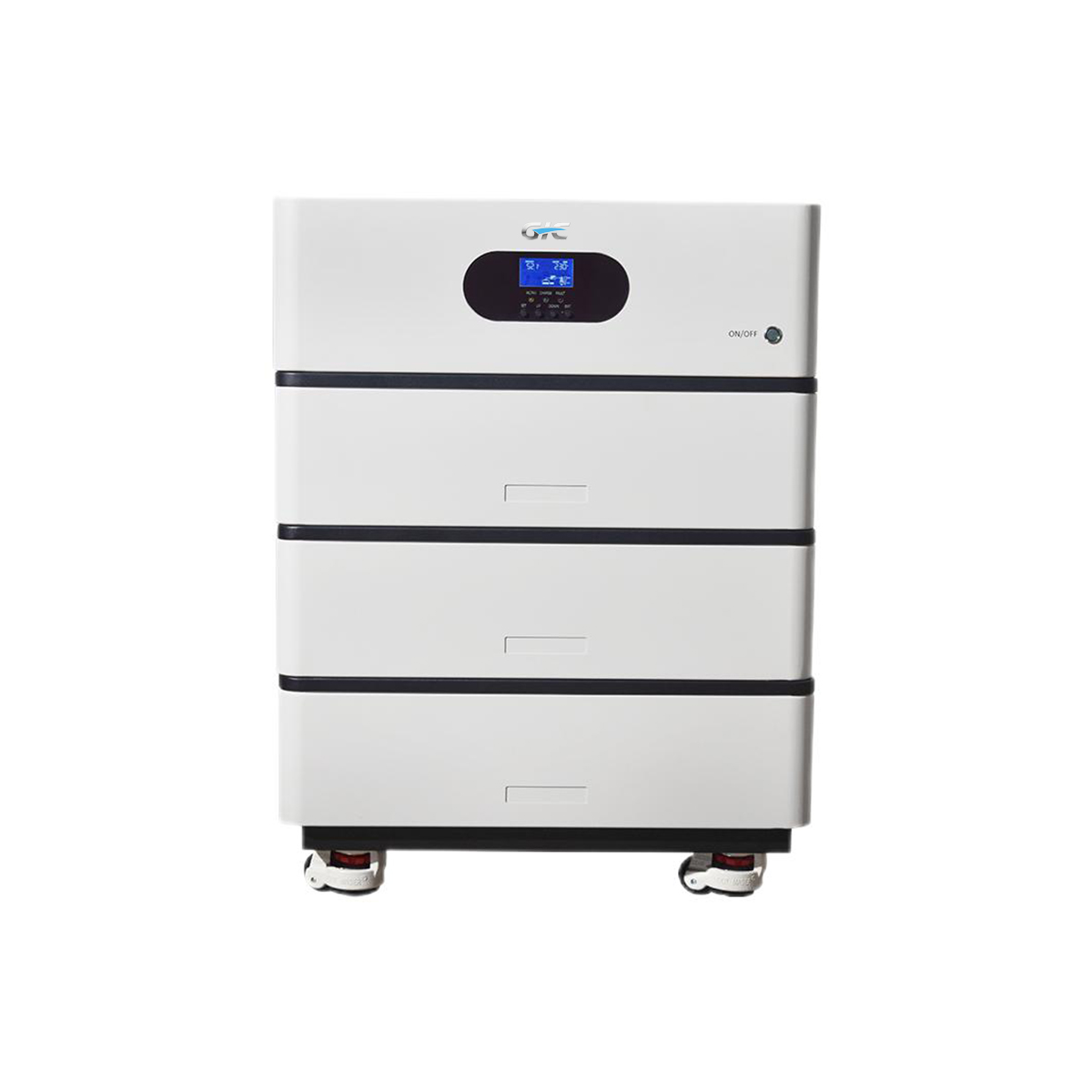
Sizing a home energy storage system is the most critical factor affecting both your upfront installation scale and long-term utility independence. Many buyers approach this decision by guessing or relying on generic estimates. There is no universal "right size" for everyone. Choosing between 5kWh, 10kWh, or 20kWh depends on a strict evaluation of your unique load profiles, daily solar generation capacity, and specific resilience goals. Overestimating wastes valuable resources, while underestimating leaves you unexpectedly vulnerable during grid failures. This guide provides an evidence-based framework to help you calculate true energy needs accurately. It shows you how to avoid common over-sizing pitfalls. You will learn to select a capacity balancing daily operational efficiency and reliable residential backup power. By the end, you will understand how to choose a setup tailored perfectly to your household demands.
Key Takeaways
5kWh is optimal for targeted peak shaving and backing up critical circuits (lights, Wi-Fi, fridge) for a few hours.
10kWh serves as the industry standard, balancing daily solar self-consumption with overnight resilience for average households.
20kWh+ is required for whole-home backup, off-grid aspirations, or supporting heavy loads like HVAC and EVs during extended outages.
Usable capacity is lower than nameplate capacity; Depth of Discharge (DoD) and inverter efficiency must be factored into sizing calculations.
Modular scalability is the safest strategy: starting with a 10kWh baseline and a compatible solar storage inverter allows for future expansion without replacing core hardware.
1. Defining the Evaluation Criteria: Sizing by Goal, Not Just Square Footage
Many industry beginners attempt to map battery requirements directly to a property's physical footprint. Matching battery size strictly to house square footage consistently leads to inaccurate sizing. Energy consumption remains fundamentally behavioral, not spatial. A large 4,000-square-foot house occupied by two people who travel frequently might consume less daily energy than a 1,500-square-foot home housing a family of five running multiple gaming PCs, electric heaters, and frequent laundry cycles. You must evaluate your habits rather than your floor plan.
Utility companies increasingly implement TOU rates, making electricity significantly more resource-intensive during early evening hours. Sizing a system to bypass peak utility rates requires calculating the specific energy consumed during this critical 4-6 hour evening window. If your household normally consumes 4kWh between 5:00 PM and 9:00 PM, a smaller battery specifically dedicated to discharging during this period offers excellent rate optimization. You draw from the grid only when rates drop overnight.
Goal 2: Maximizing Solar Self-Consumption
During peak daylight, solar panels often generate far more power than an empty home utilizes. Without a battery, this surplus flows back into the grid, often at highly reduced compensation rates. You can size the battery to store the exact surplus generated by solar panels during the day for nighttime use. This approach effectively cycles the battery daily, ensuring you consume the green energy you generate. The objective here involves matching the battery capacity to your average daily surplus yield.
Goal 3: Outage Resilience
When the grid fails, your priorities shift entirely. Sizing for resilience relies heavily on the total wattage of essential appliances multiplied by the expected duration of the outage. A short-term blackout requires minimal capacity. A multi-day severe weather event demands substantial reserves. You must decide whether you want to run every appliance in the house or just keep the lights, internet, and refrigeration functional.
The Risk of Over-sizing
Bigger is not inherently better. We frequently see buyers insisting on massive capacities without matching usage habits. You must understand the diminishing returns of acquiring a 20kWh system for a 10kWh daily deficit. Unused battery capacity simply degrades over time without providing practical utility. It extends your resource recovery timelines unnecessarily. A right-sized system works hard every day, cycling efficiently and maximizing its operational lifespan.
2. The Capacity Calculation Framework: Translating Loads to kWh
Before selecting a specific tier, you need a reliable method for calculating demand. Many people confuse the core metrics used in this industry. It helps to clarify power versus capacity.
Differentiating kW vs. kWh
Power, measured in kilowatts (kW), represents what the inverter handles at any given exact second. Think of it as water pressure in a pipe. Capacity, measured in kilowatt-hours (kWh), denotes the total volume of energy the battery stores. Think of this as the size of the water tank. You need enough kW to push the energy, and enough kWh to sustain the flow over time.
Step 1: Conduct a Load Audit
You cannot size a system without knowing what you intend to run. Identify continuous loads versus intermittent heavy loads. Continuous loads run constantly but draw minimal power. Intermittent loads draw massive spikes of power for short periods. Conduct a detailed audit of your typical devices.
Appliance Category
Load Type
Estimated Draw (Watts)
Daily Impact on Capacity
Wi-Fi Router & Smart Hubs
Continuous
15W - 30W
Very Low (approx. 0.5 kWh/day)
Refrigerator
Cycling
150W - 400W
Moderate (approx. 1.5 - 2 kWh/day)
Central Air Conditioning
Intermittent Heavy
3000W - 5000W
Extremely High (can drain 10kWh in hours)
Well Pump
Intermittent Heavy
1500W - 2000W
Moderate (runs briefly but requires high surge)
Step 2: Factor in Depth of Discharge (DoD)
Never assume the stated number on the box is entirely available for use. Most modern units utilize lithium-iron-phosphate (LiFePO4) chemistry. While highly stable, they still restrict full depletion to protect battery health. A 10kWh battery featuring a 90% DoD only yields 9kWh of usable energy. If your audit shows exactly 10kWh of required evening consumption, you actually need an 11kWh or 12kWh gross capacity unit to meet that target without forcing a system shutdown.
Step 3: Account for the Inverter Integration
Capacity means nothing if the control hardware fails to deliver it. A robust solar storage inverter must be appropriately sized to handle the surge load (starting amps) of the specific appliances the battery capacity is meant to support. If your battery holds 20kWh but your inverter maxes out at 3kW of continuous output, you still cannot start a 4kW air conditioner. The inverter serves as the critical gateway.
3. Capacity Tiers Compared: 5kWh vs. 10kWh vs. 20kWh
Once you complete your mathematical audit, selecting a tier becomes straightforward. Here is a detailed breakdown of how each standard size performs in real-world environments.
5kWh: Essential Backup & Rate Optimization
The smallest common tier serves very specific functions. It targets small homes, extremely energy-efficient properties, or homes located in areas maintaining stable grids but suffering from high evening electricity rates.
Target Profile: Buyers looking for localized outage protection or daily TOU rate avoidance.
Expected Outcomes: It successfully runs a refrigerator, an internet router, a few LED lights, and device chargers. Depending on the ambient temperature, it sustains these loads for 8–12 hours.
Limitations: It cannot support heavy 240V appliances. Attempting to run electric ranges, dryers, or central cooling units will trip the inverter immediately or drain the reserves within minutes.
10kWh: The Residential Standard
This size represents the absolute sweet spot for the modern home. It adequately balances capability against physical footprint.
Target Profile: Medium-sized homes containing 3-4 bedrooms. These owners look to maximize their rooftop solar investments and easily survive overnight grid failures.
Expected Outcomes: It covers typical evening and overnight household consumption easily. It runs all essentials plus minor convenience items like a television or microwave. It generally sustains the house for 12–24 hours assuming no solar recharge occurs the next day.
Limitations: While robust, it depletes rapidly if utilized for central air conditioning or EV charging during an active outage. Users still need to exercise moderate energy discipline.
20kWh+: Whole-Home Backup & High Autonomy
Stepping up to massive multi-module setups changes the dynamic entirely. This tier transforms the property into an independent microgrid.
Target Profile: Large homes, high-consumption households, or remote properties positioned in areas highly prone to multi-day severe weather outages.
Expected Outcomes: You achieve true energy independence. It is highly capable of supporting heavy loads, including HVAC systems and well pumps. When paired with adequate solar generation, it extends off-grid autonomy to several days.
Limitations: It requires a larger physical footprint for installation. Wall-mounting multiple heavy units often requires structural reinforcement.
4. Implementation Realities: Hidden Drains and System Efficiency
Calculations performed on paper rarely match real-world telemetry perfectly. Several environmental and hardware factors subtly drain power. You must factor these hidden variables into your initial sizing methodology.
Inverter Standby Draw
Technical forums frequently feature complaints from new users noticing unexpected battery drain overnight. Inverters consume power simply by remaining powered on and monitoring the grid. The conversion of DC battery power to AC household power requires energy. A seemingly tiny 50W idle draw consumes roughly 1.2kWh over a 24-hour period. This heavily impacts a small 5kWh system, eating up nearly 25% of its total capacity just existing. Larger systems absorb this phantom drain much more comfortably.
Temperature De-rating
Battery chemistry reacts poorly to extreme environments. Extreme cold slows down internal chemical reactions, temporarily reducing usable capacity. Extreme heat accelerates component wear and forces internal cooling fans to run constantly, draining further power. Indoor, climate-controlled installation locations preserve battery life. If you must install units in a freezing garage or a sun-baked exterior wall, you should intentionally oversize the system by 10% to 15% to compensate for thermal de-rating.
Degradation Over Time
Set realistic long-term expectations. Lithium cells degrade cyclically. Every complete charge and discharge cycle slightly reduces the maximum energy holding capability. A system rated for 10kWh today might operate safely at 8.5kWh or 8kWh by year ten. If your rigid load audit demands exactly 9kWh a decade from now, a standard 10kWh block will eventually fall short. Factor this gradual decay into initial sizing calculations by building in a comfortable buffer.
5. Shortlisting Logic: Prioritizing Scalability in a HESS
Committing to a precise size causes anxiety for many homeowners. Needs change over time. You might purchase an electric vehicle next year or add an electric heat pump. Navigating this uncertainty requires a specific procurement strategy.
The Modular Approach
We advise buyers who remain on the fence between capacities to prioritize modular architectures. Modern systems often utilize stackable 5kWh or 3.3kWh blocks. This design functions identically to building blocks. You start with a foundational capacity and physically stack additional blocks as demand grows. This prevents over-committing upfront while keeping future options wide open.
Hardware Compatibility
Do not assume all components speak the same language forever. Ensure your selected HESS brand supports adding capacity seamlessly 1–3 years down the line. The internal battery management systems must communicate properly. Adding modules later should never void your existing warranties or require a total system overhaul. Verify compatibility roadmaps with the manufacturer before finalizing any purchase.
Next Steps for Buyers
Theory only takes you so far. Recommend taking 12 months of utility bills, a detailed load audit table, and a firm list of "must-run" backup appliances to a certified installer. They use this guide's framework to finalize the technical blueprints, matching your numbers to specific hardware tolerances.
Conclusion
Right-sizing a residential battery setup remains a strict mathematical exercise, not an emotional guesswork game. Every kilowatt-hour must justify its presence through either rate optimization or necessary resilience. We summarize our baseline recommendation simply: start with a 10kWh modular Home Energy Storage System if you feel unsure. Ensure the foundation relies on a high-quality, scalable architecture. Focus entirely on realistic daily usage patterns rather than planning for extreme, once-in-a-decade edge scenarios. Balancing daily utility with sensible emergency reserves ensures your hardware delivers consistent performance year after year.
FAQ
Q: Can I run my central AC on a 10kWh home energy storage system?
A: Technically yes, but practically it presents challenges. Central air conditioners possess massive surge current requirements. A standard 10kWh battery will likely drain completely in just 2 to 3 hours under heavy AC load. We strongly recommend upgrading to a 20kWh+ setup alongside a high-output inverter if you plan to sustain central HVAC systems during grid failures.
Q: Can I mix different battery capacities later?
A: While modular systems allow expansion, you must exercise caution. Adding brand-new battery modules to highly degraded older batteries often causes internal balancing issues. The system might limit the new battery's performance to match the older unit. Always check specific manufacturer guidelines regarding acceptable expansion timelines and hardware mixing rules.
Q: How much solar do I need to recharge a 10kWh battery daily?
A: Recharging depends heavily on your geographic location and seasonal sunlight availability. As a baseline calculation, you need roughly 3kW to 4kW of dedicated solar panel capacity generating power under optimal sun hours to fill a completely empty 10kWh unit daily. This capacity strictly covers the battery; your home will need additional solar to cover simultaneous daytime loads.