The global landscape is undergoing a massive shift toward electrification. This drive creates an exploding demand for reliable energy storage. Electric vehicles navigate our highways. Power tools dominate construction sites. Sprawling off-grid solar systems keep remote areas running. The beating heart of these modern technologies is the lithium-ion energy module. As industries push for higher efficiency, understanding the anatomy of these power sources has never been more critical.
When clients ask about the creation of these energy reserves, they are usually inquiring about a complex, two-part journey. The process involves two distinct phases. First, manufacturers fabricate the individual chemical cells in a highly controlled factory environment. Second, engineers assemble those raw cells into a functional, safe, and robust energy module. While hobbyists occasionally attempt to build their own arrays in home garages, grasping the rigorous industrial processes, stringent safety requirements, and long-term cost-effectiveness is vital. This knowledge ultimately helps buyers make informed decisions when sourcing a reliable low-voltage power battery pack solution for commercial or high-drain applications.
Key Takeaways
A Dual-Phase Journey: Creating a functional power unit involves intricate chemical cell fabrication followed by precise, structurally sound mechanical assembly.
Core Components: Every reliable energy storage system requires high-quality matched cells, highly conductive pure nickel strips, robust insulation materials, and a sophisticated management board.
Safety First: Lithium-based chemistry is highly volatile if mishandled. Professional spot welding and intelligent electronic integration are non-negotiable to prevent catastrophic thermal runaway.
DIY vs. Professional: While constructing a module at home is technically possible, investing in a commercially manufactured, precisely engineered product offers vastly superior return on investment, safety, and longevity.
Industry Trends: The Future of Energy Storage Assembly
Looking at recent industry shifts, the manufacturing landscape is rapidly evolving. We are seeing a massive transition toward dry-coating electrode technologies and highly automated, robotic assembly lines. The focus is strictly on reducing environmental impact while simultaneously boosting energy density. Furthermore, AI-driven diagnostic tools are becoming standard in monitoring cell health. These smart systems predict maintenance needs before failures occur. This evolution ensures maximum reliability for any commercial deployment, keeping downtime to an absolute minimum.
Understanding the Basics: What Makes Up a Power Module?
Before diving into the complex manufacturing floor, it is helpful to break down the anatomy of a power module in practical terms. A completed unit is much more than just a box of stored electricity. It is a carefully orchestrated system of chemical and electronic components working in perfect harmony.
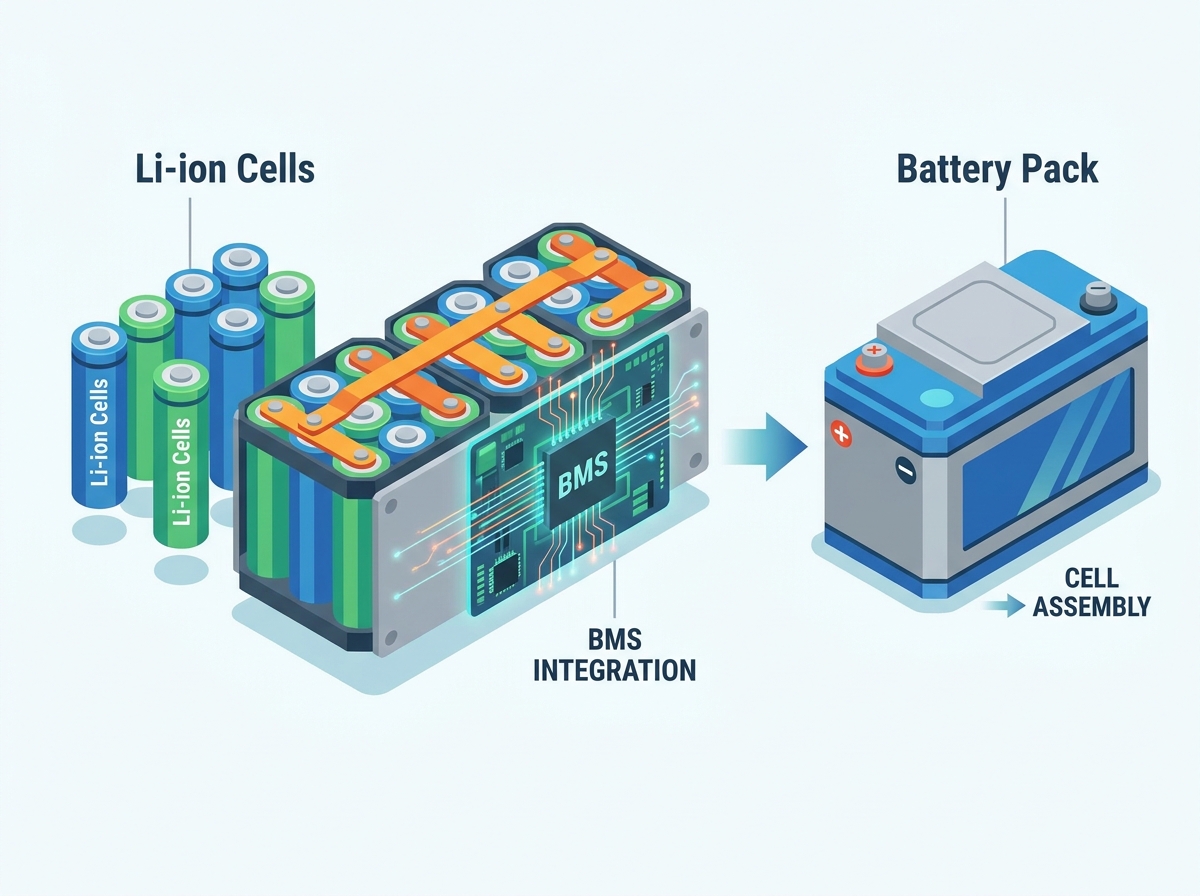
The foundation of any energy system lies in its individual cells. These come in various form factors, most notably cylindrical, prismatic blocks, and flexible pouch cells. Beyond the physical shape, the internal chemistry dictates performance. For instance, Lithium Iron Phosphate—widely known as LiFePO4—is renowned for its thermal stability and long cycle life, making it ideal for solar storage and industrial equipment. In contrast, Nickel Manganese Cobalt offers higher energy density, which is heavily favored in the electric vehicle sector. Selecting the precise cell type is the absolute bedrock of a high-performing design.
If the cells are the muscles, the Battery Management System is the brain. This intricate circuit board is dedicated to monitoring the vital signs of the energy array. It constantly evaluates voltage levels, balances the charge across individual cells, and acts as a strict gatekeeper to prevent overcharging or deep discharging. Without this intelligent oversight, the entire structure would quickly degrade or become a severe fire hazard.
The physical hardware holding the system together is equally critical. Conductive pathways are established using pure nickel strips. These strips handle high electrical currents without generating excessive heat. Insulation is meticulously applied using materials like amber-colored Kapton tape and specialized fish paper to prevent accidental short circuits. Finally, durable outer casings provide essential environmental protection against moisture, dust, and physical impact.
The Industrial Process: Fabricating the Chemical Cells
To truly understand how these energy reserves are created, we must look at the industrial fabrication of the cell itself. Current industry standards mandate highly automated, dust-free dry rooms to ensure absolute chemical purity. Even microscopic contaminants can ruin an entire production batch.
The fabrication begins in massive vats where active materials are blended with solvents into thick, ink-like slurries. These precise chemical mixtures are then uniformly coated onto ultra-thin metallic foils. Copper foil serves as the foundation for the anode, while aluminum foil is utilized for the cathode. Once coated and dried, the foils undergo calendering. Massive steel rollers compress the coated materials under immense pressure to increase the energy density and ensure a perfectly uniform thickness.
Subsequently, precision laser cutters slit these wide master rolls into exact widths required for specific cell sizes. The actual internal architecture is then formed. For cylindrical variants, the anode, a micro-porous separator membrane, and the cathode are tightly wound together in a high-speed jelly-roll configuration. In strictly controlled, moisture-free environments, a highly conductive liquid electrolyte is injected into the casing. This fluid acts as the catalyst, allowing ions to flow freely. The unit is then hermetically sealed to prevent any atmospheric exposure.
The final, crucial phase is formation. The freshly sealed unit is subjected to its very first controlled charge and discharge cycle. This vital step stabilizes the internal chemistry and forms a protective solid electrolyte interphase layer. After stabilization, each unit is rigorously tested, graded by its exact capacity, and sorted for assembly.
Step-by-Step: Assembling the Power Module
Transitioning from raw chemical fabrication to mechanical assembly requires an entirely different set of engineering disciplines. Turning individual cylinders or pouches into a cohesive, high-output power unit demands absolute precision.
Before a single connection is made, rigorous testing is mandatory. Technicians measure the resting voltage and internal AC resistance of every single unit. Grouping cells with identical characteristics is essential. A mismatched batch will cause the entire low-voltage power battery pack solution to degrade prematurely, simply because the weakest link dictates the overall performance.
Engineers must arrange the layout based on the required power output. Wiring components in series increases the total voltage. Conversely, wiring them in parallel multiplies the total capacity. This specific mathematical arrangement determines whether the final product will power a low-draw medical device or a high-torque industrial motor.
Joining the terminals is a delicate operation. Traditional soldering is strictly avoided. The prolonged heat from a soldering iron easily penetrates the casing, destroying the delicate internal separator and creating a severe fire hazard. Instead, technicians use pneumatic or electronic spot welders. These machines deliver an intense, localized pulse of electricity that instantly fuses pure nickel strips to the terminals in milliseconds, keeping the internal chemistry perfectly safe and cool.
With the physical bridge built, the electronic brain is wired into the system. Delicate balance leads are soldered to specific nodes along the series groups. This intricate wiring harness allows the management board to monitor the exact voltage of every individual sector, ensuring safe parameters during both aggressive discharge and rapid charging cycles.
The Crucial Role of Electronic Oversight in Safety
Safety is the most critical aspect of modern energy storage. The industry is currently trending toward smart management units equipped with IoT connectivity, allowing for real-time remote diagnostics. However, even standard commercial boards perform life-saving functions every second they operate.
The primary defense mechanism is overcharge and over-discharge protection. If a charger malfunctions and attempts to push voltage beyond safe limits, the system instantly severs the circuit. Furthermore, sophisticated thermal management utilizes embedded temperature probes. If the ambient or internal heat spikes dangerously, the system shuts down operations to prevent thermal runaway. Lastly, continuous cell balancing ensures that all parallel groups charge evenly, dramatically extending the functional lifespan of the module.
Actionable Selection Standards: How to Choose the Right Setup
As engineers, we do not rely on guesswork. Sourcing a ready-made, high-quality energy module requires strict adherence to technical parameters. When evaluating a commercial system, you must look beyond basic voltage and demand specific performance metrics.
For industrial and commercial applications, a standard 51.2V 100Ah configuration utilizing LiFePO4 chemistry is highly recommended. This specific setup provides 5.12kWh of robust energy storage. You should demand a cycle life of at least 6000 cycles at an 80 percent depth of discharge. Additionally, verify that the continuous discharge current is rated for 100A to handle sudden power surges. Finally, seamless integration is key. Ensure the system utilizes CAN and RS485 communication protocols to communicate flawlessly with modern hybrid inverters. By strictly adhering to these parameters, securing a reliable low-voltage power battery pack solution becomes a streamlined, risk-free process.
DIY vs. Professional Manufacturing: The Core Differences
With the rise of custom off-grid hobbies, the appeal of a DIY approach is undeniable. Hobbyists often attempt home builds to save money on upfront costs. However, let me be clear. The hidden risks heavily outweigh the initial savings.
Evaluation Metric
DIY Assembly
Commercial Manufacturing
Safety & Testing
Basic multimeters; high risk of thermal runaway due to weak spot welds.
Appears cheap initially, but frequent cell failures drive up long-term costs.
Higher upfront cost, but guaranteed 10-year lifespan yields maximum ROI.
Performance Consistency
Unbalanced cells lead to rapid capacity degradation.
Smart active balancing ensures peak performance across 6000+ cycles.
Warranty & Support
None. All liability falls on the builder.
Comprehensive factory warranties and technical engineering support.
Constructing a safe module requires significant capital investment in specialized equipment, such as professional-grade capacitive spot welders. A single accidental short circuit from a dropped tool can result in an uncontrollable metal fire. In contrast, businesses require the guarantees of commercial manufacturing. Professional facilities source Grade-A matched cells directly from manufacturers and ensure their products pass stringent vibration and safety certifications.
Conclusion
While the chemical science behind how individual energy cells are fabricated is fascinating, the subsequent mechanical assembly requires an entirely different level of absolute precision, specialized machinery, and robust electronic oversight. From the meticulous matching of internal resistance to the instant fusion of nickel strips, every step is critical to the final product's viability. For anything beyond a simple, low-stakes hobby project, relying on professionally manufactured power modules is undeniably the smartest, safest, and most economical choice. Whether you are powering a fleet of industrial robots or securing off-grid solar storage, reaching out for a professional low-voltage power battery pack solution from trusted manufacturers like GIC Supplier will ensure your specific energy needs are met safely and efficiently. Stop gambling with manual assembly and invest in engineered reliability.
FAQ
Can I solder the terminals instead of spot welding?
No, it is highly discouraged. The heat from a soldering iron can easily penetrate the thin metal casing and damage the internal polymer separator of the cell. This degrades its lifespan and creates a severe, immediate fire hazard. Spot welding, which uses a rapid, localized electrical pulse, is the only safe method for joining terminals.
How much does it cost to assemble an energy module?
The cost varies wildly based on the required capacity, voltage, and cell chemistry. While a manual approach might seem cheaper initially, factoring in the cost of pure nickel strips, a reliable smart management board, genuine Grade-A cells, and the mandatory purchase of a spot welder often makes buying a professionally manufactured unit much more cost-effective in the long run.
What is the difference between a single cell and a complete pack?
A cell is a single, individual unit that stores chemical energy. A pack is a complete, engineered system made up of multiple individual cells wired together in series and parallel. This system is managed by a sophisticated electronic board and enclosed in a protective structural casing to deliver higher usable voltage and capacity.
Why is active cell balancing necessary?
Individual units naturally have microscopic variations in manufacturing capacity and internal resistance. Over dozens of charge cycles, these slight differences compound. Without active balancing, some units would dangerously overcharge while others would deeply undercharge, rapidly leading to system failure or dangerous thermal events.
What materials are required to build a commercial energy module?
Commercial assembly requires Grade-A matched lithium cells, pure nickel strips for maximum conductivity, a programmable management board, fish paper for terminal insulation, Kapton tape for heat resistance, and custom-molded ABS plastic enclosures or heavy-duty shrink wrap for environmental protection.
How long does a professionally assembled energy module last?
When utilizing premium LiFePO4 chemistry and a smart management system, a commercial unit is typically rated for 6000 to 8000 cycles at an 80 percent depth of discharge. In practical terms, this translates to a reliable operational lifespan of 10 to 15 years under normal industrial or solar storage conditions.