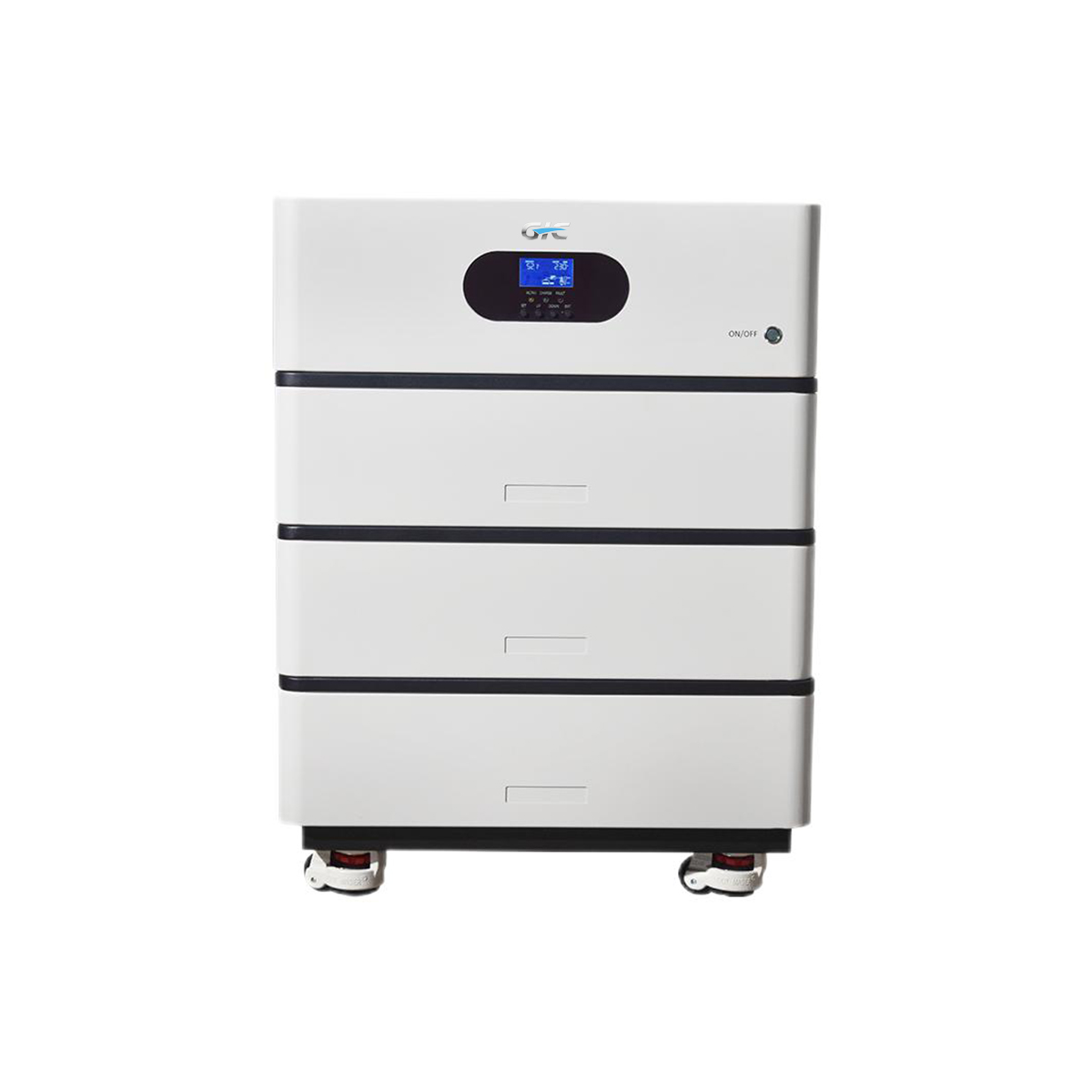
Transitioning from grid dependency to energy resilience requires more than just buying a high-capacity battery. It requires seamless system integration. Standalone backup generators are rapidly becoming obsolete. They are noisy, demand constant refueling, and fail to interact with modern smart grids. Today, homeowners are adopting cohesive ecosystems where every component works together automatically. A carefully matched lithium ion battery pack communicates perfectly with inverters and home panels to optimize energy usage, mitigate outage risks, and maximize solar investments.
We will explore exactly how these distinct parts function as a single unit. You will learn the specific hardware synergies needed for safe operation and long-term reliability. We will unpack the essential wiring and voltage configurations that dictate performance. Finally, we will cover vital software requirements and strict safety certifications you must evaluate before upgrading your property.
Key Takeaways
Successful integration relies on synchronized communication between the battery management system (BMS) and the solar inverter.
Selecting a Low-Voltage Power Battery Pack Solution often provides a safer, highly scalable baseline for standard residential setups.
Hidden failure points, such as an incompatible wiring harness, can severely degrade system efficiency and void warranties.
System evaluation must prioritize compliance with local safety standards (e.g., UL 9540) over raw storage capacity claims.
The Core Architecture of a Home Energy Storage System (HESS)
Every modern house needs reliable power. We see a fundamental triad in every Home Energy Storage System (HESS). This triad consists of generation, storage, and conversion. Generation comes from your rooftop solar panels or the municipal grid. Storage happens inside the physical battery. Conversion relies entirely on your inverter hardware. The storage anchor is the lithium ion battery pack itself. It acts as your primary direct current (DC) reservoir.
You must understand basic charge and discharge cycles to maximize your investment. You do not need an advanced chemistry degree to grasp this. When solar panels generate excess power, ions move from the cathode to the anode inside the battery cells. This process stores chemical potential energy. During discharge, ions flow back in the opposite direction. Electrons travel through your home circuits to power your appliances. This chemical-to-electrical workflow dictates your daily energy availability.
You can leverage this daily availability in two main ways. The first is peak shaving. You run your house on battery power during expensive evening grid rates. This lowers your monthly utility bills significantly. The second use case is baseline backup. You keep a percentage of your battery reserved. This reserve keeps essential loads running during unexpected neighborhood blackouts.
You face serious implementation risks if you ignore technical specifications. You must match the continuous discharge rating of your battery to your household peak demand. A common mistake involves ignoring startup surge currents. For example, your central air conditioner pulls a massive initial load when it turns on. If your battery cannot supply this heavy continuous draw, the entire system trips offline. You might also cause accelerated cell degradation. Pushing the battery beyond its rated limits shortens its operational lifespan dramatically.
Hardware Synergy: Inverters, Wiring, and Voltage Configurations
Inverter matching ultimately defines your system efficiency. Your battery must execute a flawless digital handshake with the Solar Storage Inverter. Installers typically use one of two main setups. They configure the system as either AC-coupled or DC-coupled. DC-coupled systems keep the solar energy as direct current. They feed it straight into the battery. This straightforward path avoids multiple conversion losses. AC-coupled setups convert solar DC to AC for immediate household use. They then convert any excess AC back to DC for battery storage. You lose a small percentage of usable power during each conversion phase.
System Architecture
Efficiency Profile
Best Use Case
Installation Complexity
DC-Coupled Systems
High (Fewer conversion steps)
New solar installations
Streamlined (Uses one hybrid inverter)
AC-Coupled Systems
Moderate (Minor conversion losses)
Retrofitting existing solar arrays
Higher (Requires multiple inverters)
We must also highlight the physical nervous system of your setup. The Wiring Harness is frequently overlooked by property owners. This critical component carries immense electrical loads daily. Proper wire gauge and robust shielding are completely non-negotiable. They prevent severe voltage drops across long cable runs. They also stop electromagnetic interference from causing communication errors between components.
Poor cabling creates dangerous high electrical resistance. This resistance generates dangerous thermal risks during high-load power transfers. Heat destroys battery cells quickly. It also voids manufacturer warranties if inspectors find inadequate gauge sizes during a failure investigation.
Voltage selection dictates long-term performance and safety. You must choose between high-voltage and low-voltage configurations. High-voltage systems operate at 400V or more. They suit commercial sites perfectly due to high transmission efficiency. However, a Low-Voltage Power Battery Pack Solution remains the reliable standard for residential integration. Most home setups operate safely at 48V. This low-voltage approach provides exceptional ease of installation for technicians. It offers much wider inherent safety margins against shock hazards. You also gain modular scalability. You can stack additional 48V battery modules easily as your family grows.
Software Integration and Battery Management Systems (BMS)
Hardware needs intelligent instructions to function safely. The Battery Management System (BMS) serves as your non-negotiable logic center. It constantly monitors individual cell voltages and internal temperatures. The BMS actively prevents overcharging by stopping incoming current when the battery is full. It halts deep depletion before permanent cell damage occurs. It also eliminates thermal runaway risks by throttling power output if temperatures spike unexpectedly.
The BMS also performs crucial cell balancing. Over time, individual cells charge at slightly different rates. The BMS ensures all cells reach equal voltage levels. This passive or active balancing ensures no single cell degrades faster than the others. It maximizes the total lifespan of the lithium ion battery pack.
Smart grid communication relies entirely on the BMS. The battery software talks continuously to the inverter. It also communicates directly with your home energy apps. This intelligent network allows you to prioritize specific household loads effortlessly. You can program the system to keep your refrigerator running first during an outage. You might instruct it to delay charging your electric vehicle until midnight when grid demand drops. These smart decisions stretch your stored energy further.
Firmware interoperability presents a major challenge for many homeowners. You risk owning a completely "bricked" system if components cannot communicate. Proprietary battery software sometimes refuses to recognize third-party inverters. Manufacturers frequently push automated firmware updates over the internet. A sudden update to the inverter might break the digital handshake with the battery. The hardware remains physically fine, but the system shuts down completely.
You need strict evaluation criteria before spending money. We strongly advise buyers to verify closed-loop communication compatibility lists. Follow these precise steps before purchasing any components:
Request the official inverter compatibility sheet directly from the battery manufacturer.
Confirm the exact firmware versions required for both the inverter and the BMS.
Ask your local installer to guarantee software compatibility in the final written contract.
Ensure remote update capabilities exist so technicians can fix future software bugs easily.
Safety Standards, Compliance, and Environmental Realities
Energy storage involves incredibly high power density. We must address the safety concerns associated with all lithium-based chemistries. The EPA and various industry bodies establish strict regulatory baselines. These guidelines focus heavily on thermal runaway mitigation. Thermal runaway happens when a physically damaged cell overheats uncontrollably. It spreads extreme heat to adjacent cells rapidly. Modern engineering prevents this chain reaction, but strict adherence to regulatory baselines remains crucial for your safety.
You must look for specific mandatory residential certifications. A reputable lithium ion battery pack always carries a UL 1973 certification. This proves the individual battery modules survived severe safety testing, including crush and nail penetration tests. However, the entire physical setup requires a UL 9540 certification. This certification validates the full system integration. It ensures the battery and inverter operate together safely under severe fault conditions without causing a fire.
Placement and environmental factors dictate your installation location heavily. You cannot simply drop a heavy battery in any spare corner. You must outline the structural requirements carefully with your contractor. Most systems require tightly temperature-controlled environments. Extreme cold reduces available discharge capacity significantly. Extreme heat accelerates cell aging and voids warranties. You must also provide adequate clearance spaces around the units. This open space allows for necessary convective cooling.
Furthermore, installers must use fire-rated mounting surfaces for all indoor wall installations. Garage walls sharing a boundary with living spaces usually require reinforced drywall to meet local fire codes.
We must provide a transparent trust signal regarding modern chemistries. Modern LFP (Lithium Iron Phosphate) packs are highly stable. They are significantly safer than older cobalt-heavy chemistries used in early electronics. They do not combust easily, even when punctured. However, improper installation by uncertified technicians remains your absolute highest risk factor. Poorly crimped cables or ignored clearance rules will compromise even the safest hardware. Always hire certified professionals who understand building codes.
Procurement Checklist: Shortlisting Your Integrated Solution
Choosing the right equipment requires a systematic approach. You must move past glossy marketing brochures. Focus instead on hard specifications and real-world capabilities.
Capacity vs. Output: You must measure continuous power ratings against total storage capacity. Total capacity (measured in kWh) represents the overall size of your energy tank. Continuous output (measured in kW) acts like the nozzle on a water hose. A massive 20kWh battery is useless for peak loads if its continuous output is only 3kW. You must base your output requirements on actual household load calculations.
Scalability assessment: Consider your future energy needs. Can you easily add another lithium ion battery pack to the existing inverter in three years? Some systems lock you into a specific proprietary size. A modular setup allows you to connect more storage seamlessly as your family expands.
Warranty reality check: Read the fine print carefully. You must differentiate between a simple "calendar life" warranty and a robust "cycle life / throughput" warranty. A calendar warranty might promise ten years of coverage regardless of use. A cycle life warranty guarantees performance for a specific number of deep charge cycles. Look for throughput warranties that guarantee a minimum megawatt-hour (MWh) delivery over the product's lifespan.
Next step action: You need a structured framework for interviewing local installers. Ask them for detailed single-line diagrams of your proposed electrical setup. Demand proof of component compatibility before signing. You should also secure a clear Service Level Agreement (SLA) outlining post-installation support and emergency response times.
Conclusion
Your transition to true energy independence demands careful planning and precise execution. A Home Energy Storage System is truly only as reliable as its weakest integration point. Exceptional battery cells mean absolutely nothing if the inverter communication fails or the wiring harness overheats under load.
We strongly urge buyers to prioritize cohesive ecosystems. You must demand verified hardware synergies over standalone spec-sheet metrics. Match your continuous output needs accurately against your daily consumption. Insist on stringent safety certifications like UL 9540 to protect your property. Protect your long-term investment by hiring certified installers who understand low-voltage architectures thoroughly.
Take the next logical step today. Use an online household sizing calculator to determine your actual daily load profile accurately. Book a consultation with a certified regional solar installer. You can also review detailed case studies of successful residential integrations to see these technical principles in action.
FAQ
Q: Can I connect a new lithium ion battery pack to an older solar inverter?
A: Connecting modern storage to older hardware presents distinct challenges. You must consider AC versus DC coupling limitations carefully. Older string inverters rarely support direct DC-coupled battery integration, requiring you to build an AC-coupled setup. Furthermore, strict firmware compatibility is absolutely necessary. The new battery management system must communicate flawlessly with the legacy inverter. This often requires specialized communication hubs or manufacturer-approved software updates.
Q: Why is a 48V Low-Voltage Power Battery Pack Solution recommended for homes?
A: A 48V architecture strikes the perfect operational balance for residential applications. It offers major inherent safety advantages because low-voltage DC poses a significantly lower shock risk during installation and maintenance. It guarantees exceptional cost-effectiveness. The market provides vast component availability for 48V systems, making replacement parts affordable. This standard also allows for easy, modular scalability as your household energy needs grow.
Q: What happens to my Home Energy Storage System (HESS) when the grid goes down?
A: Your system relies on an automatic transfer switch (ATS) during grid failures. The ATS detects the outage instantly and disconnects your home from the municipal grid. This islanding mechanism prevents your stored power from back-feeding into external power lines, protecting utility repair workers. Once isolated, the inverter smoothly pulls direct current from your battery to keep your essential household circuits running seamlessly.
Q: Does the quality of the wiring harness really impact battery life?
A: Yes, it drastically impacts long-term battery health. Poor wiring causes high electrical resistance. This resistance generates excess heat during high-load power transfers. Heat directly harms sensitive battery cells and degrades the entire system rapidly. Substandard cabling also leads to inefficient charging and severe voltage drops. These drops force the inverter and battery management system to work harder, ultimately reducing your operational lifespan.