Escalating utility demand charges hit facility budgets hard every single month. Furthermore, unexpected power outages disrupt operations and cause costly downtime. These dual threats make battery storage a strict financial necessity. It is no longer merely a corporate sustainability initiative.
Sizing these systems creates a tough dilemma for facility engineers. Oversizing ruins your Return on Investment through unnecessary upfront capital expenditures. Conversely, undersizing creates huge operational risks. You might miss peak shaving targets entirely. You could drop critical loads during unexpected grid failures.
This article gives facility managers and engineers a rigorous, step-by-step framework. We show you how to correctly dimension your energy assets. You will learn to evaluate interval data, classify load types, and respect site constraints. Our goal is to help you build a resilient, high-performing power strategy.
Key Takeaways
Sizing requires distinct calculations for power (kW) to handle demand spikes and capacity (kWh) to sustain operations over time.
Effective peak shaving relies on high-resolution interval data captured by a Smart Energy Meter, rather than aggregate monthly utility bills.
Backup power sizing must focus solely on segregated critical loads; attempting to back up an entire commercial facility is rarely economically viable.
Real-world sizing must account for battery degradation, thermal management parasitic loads, and specific hardware synergies like the correct Solar Storage Inverter.
The Financial Baseline: Defining Success Criteria and Load Profiles
Moving Beyond the Monthly Bill
Standard utility bills fail to provide the granular data you need. They only show aggregate monthly consumption and a single peak demand number. To size effectively, you need 15-minute interval data. High-resolution data reveals the exact magnitude and duration of your facility's load spikes. You cannot manage what you cannot measure accurately. Relying on an average monthly profile often leads to catastrophic undersizing.
Quantifying the Business Problem
You must separate your financial calculations into two distinct categories to define success.
Peak Shaving ROI: Look at your current demand charge penalties. Utilities measure these charges in dollars per kilowatt ($/kW). Compare these ongoing penalties against the projected cost of your storage installation. Calculate how much demand you can reliably shave each month.
Backup Power Value at Risk (VaR): Determine the exact per-hour cost of facility downtime. You must factor in idle labor and spoiled inventory. Do not forget the costly time required to reboot heavy manufacturing lines. This metric justifies your capacity requirements.
Establishing the Baseline
Always audit your power quality first. We highly recommend installing a Smart Energy Meter to map the baseline load profile. Do this before introducing any storage calculations. Accurate metering establishes a firm baseline. It captures harmonic distortion, phase imbalances, and exact consumption peaks. This step validates your future savings and ensures your design relies on factual evidence.
Sizing for Peak Shaving: Balancing Power (kW) and Capacity (kWh)
Defining the Metrics
Engineers and managers often confuse power and capacity. You must separate these metrics clearly.
The Inverter Rating (kW) dictates the maximum demand spike the system absorbs instantaneously. Think of it as a water pipe's diameter. A wider pipe delivers more water quickly. Battery Capacity (kWh) dictates how long the system can discharge at that peak rate. Think of it as the actual water tank's volume. Both metrics must align perfectly to achieve your operational goals.
The Calculation Framework
Start by identifying your target demand limit. For example, you might decide to cap utility draw at 200kW to avoid higher penalty tiers. Next, graph your facility's power consumption over a standard month. Calculate the area under the curve for peaks exceeding your 200kW target limit. This mathematical integral determines the exact usable kWh you require to keep the utility draw flat. Always calculate based on worst-case seasonal scenarios.
The Mid-Market Benchmark
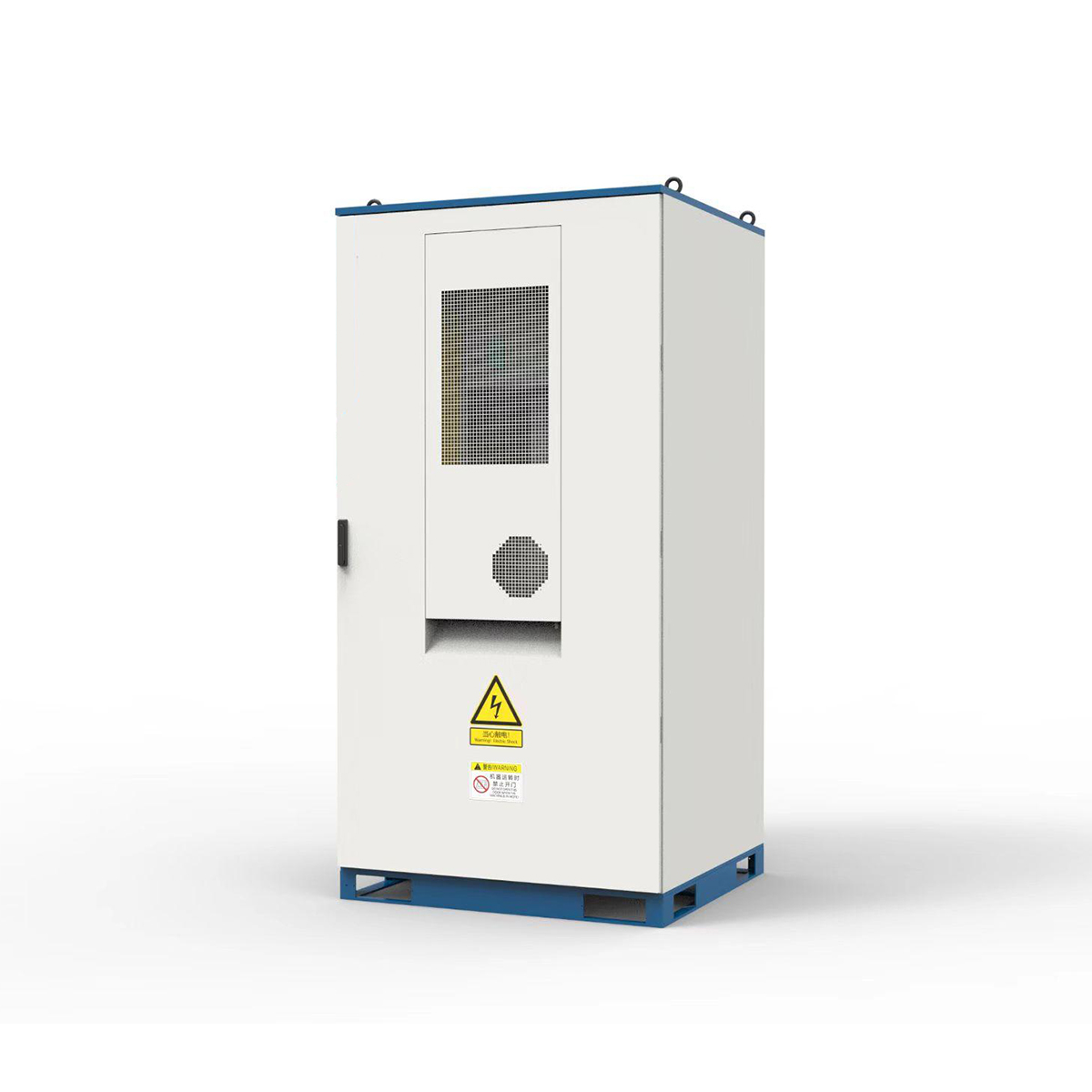
The industry relies heavily on standardized modular blocks to simplify deployment. A 100kW 215kWh energy storage system has become a standard benchmark for mid-sized facilities. It offers an optimal roughly two-hour discharge profile. This ratio perfectly matches typical utility peak demand periods. Using modular building blocks simplifies maintenance, accelerates deployment timelines, and streamlines the permitting process.
Sizing for Backup Power: Segregating Critical C&I Loads
The 100% Backup Myth
Running a full commercial operation entirely on off-grid battery power is rarely viable. It requires massive spatial footprints and unrealistic capital expenditures. The costs destroy project feasibility immediately. Do not attempt to back up every air conditioner, breakroom appliance, and non-essential lighting circuit.
Critical Load Segregation
You must isolate your electrical circuits into distinct tiers. Proper segregation ensures your battery supports true business continuity.
Load Tier
Description
Examples
Backup Requirement
Tier 1 (Critical)
Loads essential for safety and core operational continuity.
Life safety systems, IT infrastructure, core PLC controls.
Zero-transfer-time required. Uninterruptible.
Tier 2 (Sheddable)
Loads that offer comfort but do not halt production.
General HVAC, non-essential lighting, peripheral outlets.
Automatically disconnected during grid outages.
Factoring in Motor Inrush Currents
Heavy machinery demands massive transient power surges upon startup. These motor inrush currents routinely hit three to seven times the nominal running load. For instance, a 20kW induction motor might demand 120kW for a few milliseconds to break static inertia. Your system's peak overload rating must exceed this threshold. Otherwise, you risk severe inverter faults and immediate system shutdowns during a critical grid failure.
Hardware Architecture: Inverters, Topology, and Solar Integration
Selecting the Right C&I ESS Topology
You have two primary integration paths. Choosing the correct architecture dictates long-term efficiency.
AC-Coupled Systems work best for retrofitting existing facilities. If you already have established solar arrays, AC coupling simplifies the design. It allows independent operation and easier sizing for distinct peak shaving applications.
Conversely, DC-Coupled Systems offer higher overall efficiency because they avoid multiple inversion steps. They remain the superior choice for new microgrid builds. Every modern C&I ESS requires careful topological alignment to maximize conversion efficiency.
The Role of the Solar Storage Inverter
Your choice of inverter dictates your facility's operational resilience. A robust Solar Storage Inverter governs grid-forming capabilities during an outage. When the utility grid fails, the inverter must instantaneously create a localized microgrid.
You must size the inverter's clipping limits carefully, especially when pairing it with a heavily oversized photovoltaic array. Proper sizing prevents energy waste during peak solar generation hours. It also ensures seamless islanding and flawless phase synchronization when reconnecting to the utility grid.
Implementation Realities: Degradation, Thermal Loads, and Compliance
The Degradation Buffer
All lithium-ion batteries degrade over time due to chemical cycling and thermal stress. Engineers must strictly size for End-of-Life (EoL) capacity, not just Day 1 performance. We recommend adding a 15–20% capacity buffer to your initial sizing calculations. This strategic buffer ensures your system still hits peak shaving targets in Year 10. Failing to account for degradation means you will miss financial targets in the latter half of the asset's lifespan.
Parasitic Loads
Every commercial energy storage system consumes energy to maintain itself. You must account for liquid cooling pumps and HVAC thermal management systems. These auxiliary components draw continuous power to keep battery cells within safe operating temperature ranges. We call these parasitic loads. They reduce your net usable capacity. Always subtract these loads from the nameplate rating when calculating your operational runway.
Space and Compliance Constraints
Fire codes strictly dictate site layouts and equipment positioning. Standards like NFPA 855 and UL 9540 govern spacing rules to prevent thermal runaway propagation.
Cabinets generally require a minimum three-foot clearance from adjacent structures.
Regulations often cap the maximum allowable energy density per cabinet (typically 50kWh or 250kWh depending on specific UL listings).
Authorities Having Jurisdiction (AHJs) may require dedicated fire suppression hookups.
These regulations directly limit the total capacity you can legally install on your available site footprint.
Shortlisting Your System: Evaluation Dimensions and Next Steps
Feature-to-Outcome Evaluation
Ask tough questions about the software ecosystem. Does the Energy Management System (EMS) offer predictive, AI-driven dispatching? Advanced software reads weather forecasts and utility rate schedules to pre-charge batteries automatically. Basic time-of-use scheduling often falls short.
Hardware modularity also matters deeply. You should be able to scale the system by adding battery racks later. You should not have to replace the central inverter just to gain an extra hour of backup duration.
Evaluating Warranty and Bankability
Ignore generic marketing promises outlining a simple "10-year lifespan." Evaluate the throughput warranty instead. This metric measures the total megawatt-hours (MWh) the manufacturer guarantees the battery will deliver over its life. Check the fine print for specific depth-of-discharge (DoD) limitations. Some warranties void automatically if you routinely discharge the battery past 90%. These details dictate real-world reliability and financial security.
Next-Step Actions
Take immediate, practical action to prepare your facility for procurement.
Install sub-metering on your most critical electrical panels to capture granular data.
Extract a full 12 months of utility interval data to capture seasonal spikes.
Engage a qualified vendor to perform a simulated load-profile dispatch analysis using your actual data.
Conclusion
Right-sizing a commercial energy storage system is a complex balancing act. You must weigh financial pragmatism against operational resilience. Never rely on aggregate assumptions or rough estimates to make capital decisions. Let verified interval data drive your procurement strategy.
Proper planning ensures maximum financial returns during normal grid operations. It also guarantees reliable performance during unexpected emergencies. Take control of your energy future by mapping your load profiles, understanding your critical circuits, and demanding rigorous sizing analyses today.
FAQ
Q: Can I use the same battery capacity for both peak shaving and backup power?
A: Yes, through "capacity reservation" in the software. However, you must size the system to stack these use cases—reserving a strict percentage (e.g., 20%) for emergency backup means that capacity is no longer available for daily peak shaving.
Q: How does depth of discharge (DoD) affect my usable sizing calculations?
A: A 200kWh battery with an 80% usable DoD only yields 160kWh of functional energy. Always calculate ROI based on usable capacity, not nameplate capacity.
Q: At what point does a commercial facility need to transition from modular cabinets to a containerized ESS?
A: Generally, once total capacity requirements exceed 500kWh to 1MWh, 20-foot containerized solutions become more cost-effective regarding site prep and interconnection than linking multiple standalone outdoor cabinets.