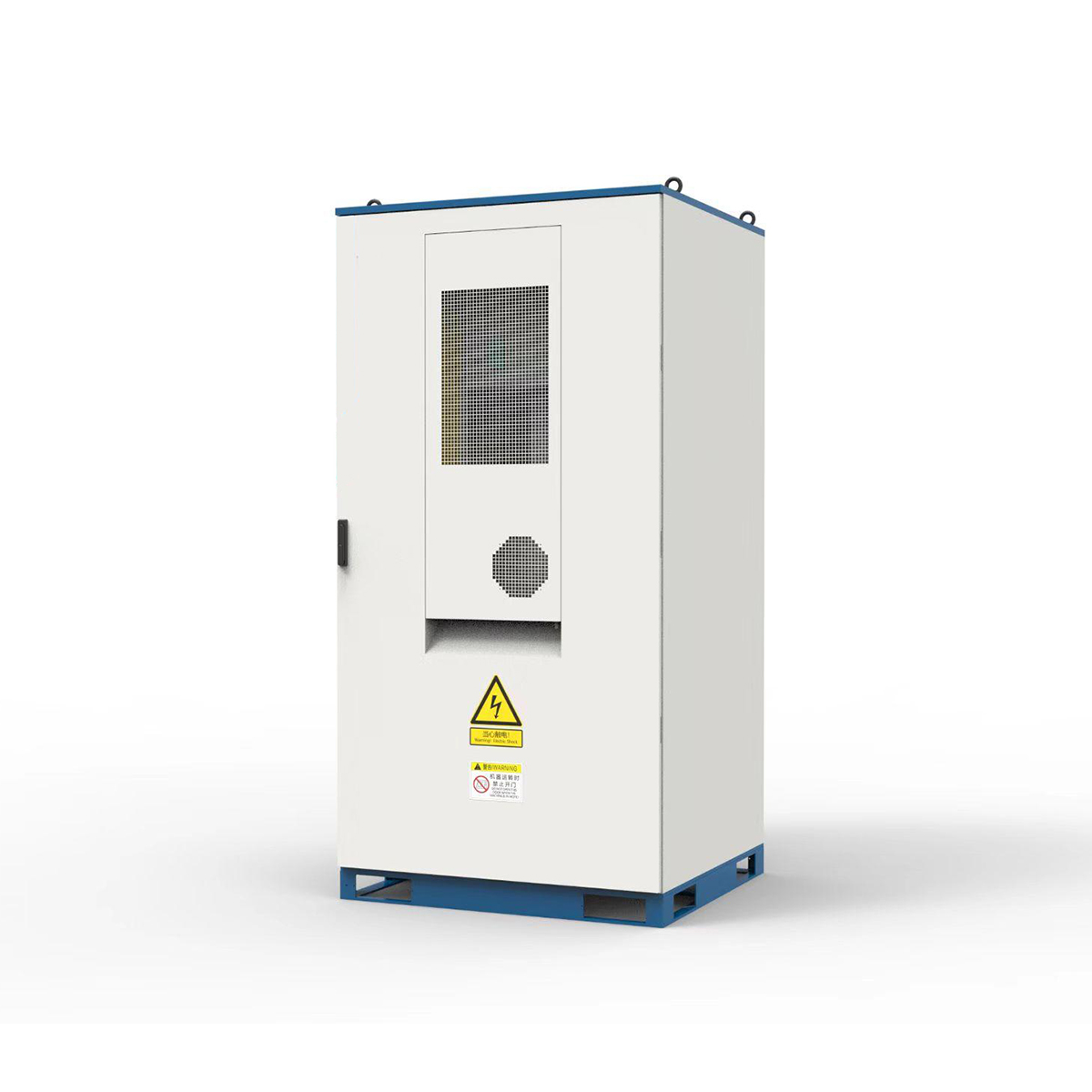
Commercial energy storage investments carry exceptionally high stakes. A poor decision can easily result in stranded assets, catastrophic fire risks, and missed return on investment due to frequent system downtime. You are not simply purchasing a piece of hardware off a shelf. Instead, you are entering a critical 10- to 15-year operational partnership. Your chosen partner will directly impact your facility's resilience and efficiency. We designed this article to provide a strictly evidence-based framework for evaluating vendors. You will learn how to mitigate project risks efficiently. We will help you shortlist the right partner for your specific site requirements. This guide cuts through industry jargon and marketing noise. It delivers actionable steps to secure a reliable, high-performing asset for your business.
Key Takeaways
Distinguishing between a direct C&I ESS manufacturer and a system integrator is the first step in defining project accountability.
Hardware specifications mean little without a robust, interoperable Energy Management System (EMS) to drive peak shaving and load shifting.
Bankability and proven safety certifications (UL 9540A) are non-negotiable baselines for commercial battery storage.
Long-term viability relies on verifiable warranties, local commissioning support, and transparent Service Level Agreements (SLAs).
Assess Business Models: Integrators vs. Direct C&I ESS Manufacturers
The energy storage market features two primary business models. You must contrast pure-play hardware manufacturers against turnkey system integrators. Pure-play manufacturers design and build the physical battery racks and inverters. Integrators source components from multiple vendors. They package these components into a unified system. Understanding this distinction helps you define project accountability early.
A direct C&I ESS manufacturer typically offers a "single throat to choke" model. This means one company holds responsibility for both hardware defects and software glitches. Multi-vendor setups managed by integrators can complicate support. If an inverter fails, the integrator might blame the battery supplier. You want to avoid finger-pointing during critical outages. A unified accountability structure significantly reduces maintenance delays.
Cost and customization often pull buyers in opposite directions. Buying an all-in-one solution directly from an Original Equipment Manufacturer (OEM) usually lowers upfront capital expenditure. OEM systems arrive pre-configured and require less on-site engineering. However, complex facilities might require highly specific grid configurations. In these cases, hiring an Engineering, Procurement, and Construction (EPC) firm makes sense. An EPC can assemble best-of-breed components tailored exactly to your site.
Supplier Shortlisting Logic
You should match the supplier type to your internal engineering capacity. Consider project complexity before sending requests for proposals.
Low Engineering Capacity: Choose an all-in-one OEM. They provide standardized, plug-and-play systems.
High Project Complexity: Choose a specialized system integrator. They can navigate unique utility interconnections seamlessly.
Strict Budget Constraints: Direct OEM purchasing generally avoids integrator markup fees.
Common Mistake: Buyers often select an integrator for a simple load-shifting project. This adds unnecessary markup to the final invoice. Always default to an OEM for standard commercial applications.
Evaluating Commercial Battery Storage Hardware and Performance
Hardware evaluation begins at the cellular level. You should focus entirely on Lithium Iron Phosphate (LFP) cell chemistry. LFP dominates the commercial sector due to its superior thermal stability and extended lifespan. Review the supplier's cell degradation curves carefully. Marketing brochures often highlight theoretical lifespans. You must demand guaranteed throughput over time. This data reveals how much energy the system can discharge before degrading past 70% capacity.
Thermal Management Systems (TMS) dictate hardware longevity. You must compare liquid-cooling against traditional HVAC air-cooling. Your choice depends heavily on your specific climate and expected footprint. Liquid-cooling systems pack battery modules tightly. This increases system density and shrinks the physical footprint. Liquid systems also consume less auxiliary power. Lower auxiliary consumption directly improves your long-term OpEx. HVAC air-cooling systems are simpler but require more space. They suit moderate climates where extreme heat poses less risk.
Comparison of Thermal Management Systems
Feature
Liquid-Cooling TMS
HVAC Air-Cooling TMS
Energy Density
High (Compact footprint)
Moderate (Requires more spacing)
Auxiliary Power Use
Low (Reduces OpEx)
High (Fans consume more energy)
Climate Suitability
Extreme hot/cold environments
Mild to moderate environments
Maintenance Complexity
Moderate (Requires fluid checks)
Low (Filter replacements primarily)
System density and modularity determine your future flexibility. Assess how easily the hardware scales. Facility load profiles frequently increase as businesses grow. Adding electric vehicle chargers or heavy machinery alters your power demands. Modular hardware allows you to add battery racks later without redesigning the entire commercial battery storage layout. Rigid systems force you to buy entirely new containers.
Verification forms the final hardware evaluation step. Never accept marketing spec sheets at face value. Request third-party degradation test data. Laboratories like DNV or UL provide unbiased performance reports. These reports validate the manufacturer's cell life claims under real-world cycling conditions.
Software and Interoperability: The Brain of the Energy Storage Solution
Hardware acts as the muscle, but software serves as the brain. A successful deployment requires flawless synchronization between the Battery Management System (BMS) and the Energy Management System (EMS). The BMS operates locally at the rack level. It monitors individual cell voltages, temperatures, and balancing. The BMS ensures absolute cell safety. Meanwhile, the EMS executes your financial dispatch strategies. The EMS analyzes facility load patterns to perform demand charge management. It also handles time-of-use energy arbitrage to maximize utility bill savings.
Vendor lock-in presents a significant risk to project viability. Some suppliers force buyers into closed software ecosystems. They mandate proprietary software licenses for the lifespan of the project. You must assess whether the supplier allows API integration. An open-architecture energy storage solution permits third-party Distributed Energy Resource Management Systems (DERMS) to control the asset. This flexibility lets you switch software providers later if the original vendor fails to deliver promised updates.
Grid integration requires careful upfront planning. You must verify compatibility with local utility communication protocols. Furthermore, the software must integrate smoothly into existing site infrastructure. For instance, if your facility already uses solar PV inverters, the EMS must communicate with them. It needs to curtail solar production or direct excess solar into the batteries efficiently.
Key Steps for Ensuring Interoperability
Request open API documentation (e.g., Modbus TCP/IP, DNP3) during the initial bidding phase.
Verify the EMS can interpret signals directly from your local utility meters.
Confirm communication compatibility between the ESS controller and existing solar inverters.
Demand a software demonstration showcasing autonomous peak shaving logic.
Safety Standards, Compliance, and Supplier Bankability
Fire safety demands rigorous scrutiny. Thermal runaway mitigation is the most critical technical requirement. You must demand verifiable UL 9540 and UL 9540A fire safety test reports. UL 9540 certifies the safety of the complete energy storage system. UL 9540A is a destructive test method. It evaluates how a battery module behaves during a forced thermal runaway event. You need test reports at the cell, module, and system levels. These reports prove a fire will not propagate uncontrollably between battery racks.
Certifications extend beyond just fire safety. You must ensure the chosen ESS supplier meets regional interconnection standards. In North America, IEEE 1547 compliance is mandatory for connecting distributed resources to the grid. Failing to meet regional grid codes results in failed utility inspections. This delays your project commissioning by months. Always request a compliance matrix customized to your specific geographic location.
Financial bankability secures your long-term investment. A 10-year warranty is completely useless if the company goes bankrupt in three years. You must evaluate the supplier's balance sheet carefully. Look for Tier 1 status recognized by organizations like BloombergNEF. Review their market history and deployed megawatt-hour track record. A financially robust supplier guarantees they will remain in business to honor future warranty claims and software updates.
Best Practice: Ask prospective suppliers for their Altman Z-score or equivalent financial health metric. Establish their profitability trajectory over the last five years before signing any procurement contracts.
Warranties, Commissioning, and Long-Term Operations
Warranties often contain hidden caveats. You must deconstruct the warranty structure thoroughly. Separate the product warranty from the performance guarantee. The product warranty covers manufacturing defects in the physical components. The performance guarantee covers capacity retention and round-trip efficiency. For example, a reliable supplier will guarantee at least 70% capacity retention at year ten. They will explicitly state the permitted annual energy throughput limits to maintain this guarantee.
Commissioning realities dictate your project timeline. Review the supplier's Factory Acceptance Testing (FAT) protocols. FAT occurs at the manufacturing facility before shipment. It verifies the system functions correctly under controlled conditions. Next, evaluate their Site Acceptance Testing (SAT) protocols. SAT occurs at your facility after installation. It proves the system integrates successfully with your specific grid environment. A dependable C&I energy storage system supplier provides detailed checklists for both testing phases.
Service Level Agreements (SLAs) determine your operational uptime. Hardware will eventually require maintenance. You must evaluate their guaranteed response times for preventative and corrective maintenance. Check their localized spare parts availability. If a proprietary inverter fails, waiting six months for an overseas replacement destroys your project economics. Verify the geographical location of their field service engineering teams. Local technicians ensure faster troubleshooting and minimal system downtime.
Conclusion
Transitioning from evaluation to procurement requires strict discipline and clear priorities. Selecting a vendor involves balancing hardware quality, software agility, and financial stability. The cheapest upfront capital expenditure often hides substantial long-term OpEx liabilities. Compromised software, weak safety certifications, or poor local support will rapidly erode your initial savings. A reliable operational partner ensures your asset performs flawlessly for its entire expected lifespan.
We encourage you to use this framework to audit your current shortlist aggressively. Demand independent safety test reports and transparent software integration capabilities. Request detailed technical documentation before entering contract negotiations. Initiate direct consultations with vendors to test their engineering responsiveness. Taking these deliberate steps secures a robust, future-proof energy asset for your facility.
FAQ
Q: What is the typical lead time for a C&I energy storage system?
A: Standard supply chain timelines typically range from 3 to 6 months. All-in-one modular units usually ship faster because they are pre-engineered and standardized. Custom configurations requiring specific inverter matching or specialized cooling systems often push delivery times closer to 8 or 9 months. Early procurement planning mitigates these delays.
Q: How do I verify the safety claims of an ESS supplier?
A: You must request full UL 9540A test reports directly from the supplier. Do not accept marketing summaries. Review the actual testing lab data regarding thermal runaway propagation. Furthermore, consult your local Authority Having Jurisdiction (AHJ) and local fire department before procurement to ensure the system meets municipal codes.
Q: Should I choose an AC-coupled or DC-coupled C&I storage system?
A: The choice depends on your site infrastructure. An AC-coupled system works best for retrofitting storage into an existing solar facility. It offers easier integration without replacing current inverters. A DC-coupled system is ideal for building a new, integrated microgrid. It provides higher overall efficiency by avoiding redundant DC-to-AC power conversions.