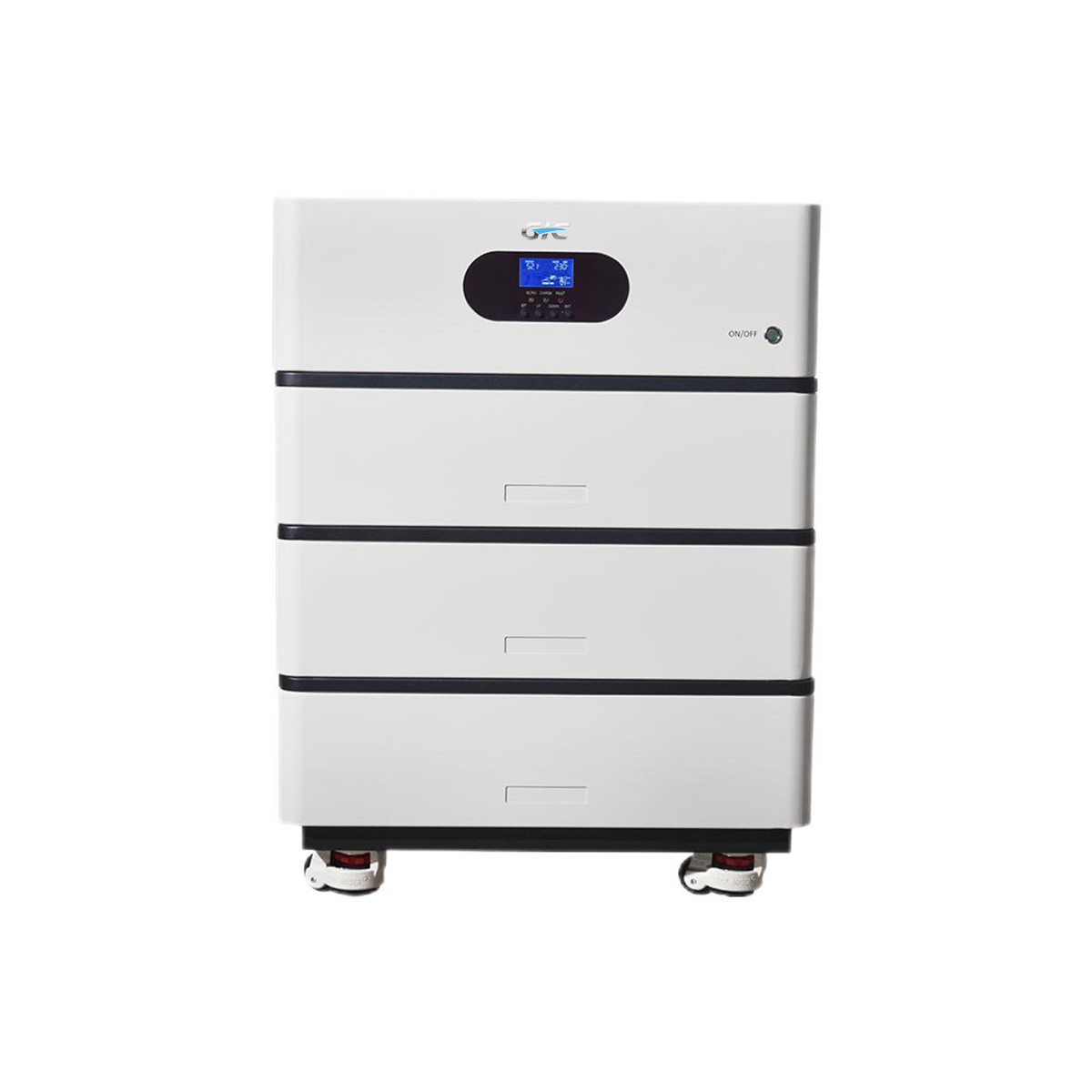
The transition from traditional grid-tied solar to battery-backed energy resilience represents a massive shift in residential power. Homeowners no longer just want to generate electricity. They need reliable backup when the grid fails. As net-metering policies become less favorable and grid instability rises, buyers face a critical choice. You must decide whether to invest in storage-ready infrastructure from day one. Relying solely on the grid is no longer a guaranteed safety net. This guide positions the solar storage inverter as the central hub of a modern home energy system. We provide a clear, unbiased evaluation of its benefits, costs, and implementation realities. You will learn how these units optimize daily energy usage and streamline installations. Armed with these insights, you can make a highly informed purchasing decision for your property.
Key Takeaways
A solar storage inverter (often called a hybrid inverter) combines solar and battery management into a single, highly efficient unit.
Primary financial benefits include Time-of-Use (TOU) rate arbitrage and maximizing self-consumption of generated solar.
DC-coupled architectures reduce energy conversion losses compared to retrofitted, dual-inverter setups.
Upfront premiums are offset by reduced installation complexity and lower long-term hardware redundancy.
Choosing the right unit requires matching surge power capabilities with site-specific critical loads.
1. Understanding the Role of a Solar Storage Inverter in a PV Storage System
To grasp how modern solar infrastructure works, we first need to define the core hardware. A hybrid inverter acts as the brain of your electrical network. It manages multiple power sources simultaneously. First, it routes raw Direct Current (DC) power generated by your solar panels. Second, it safely manages the flow of this DC power into and out of your battery bank. Finally, it converts that stored DC power into Alternating Current (AC). Your household appliances and the broader utility grid rely on this AC power to function properly.
Older systems suffered from inefficient hardware overlap. Traditional setups required a standard grid-tied solar inverter to handle roof power. If you wanted to add batteries later, installers had to add a completely separate solar battery inverter. This dual-inverter approach created unwanted hardware redundancy. It occupied excess wall space, required more wiring, and increased the potential for equipment failure.
Merging these functions into a single unit solves this redundancy problem directly. You eliminate the need for a secondary device. This streamlined approach sits at the heart of every high-performing PV storage system today.
Furthermore, modern hybrid units offer a distinct architectural advantage known as DC-coupling. They keep the energy in its native DC form as it travels from the solar panel directly into the battery cell. Older retrofits used AC-coupling. In an AC-coupled setup, power converts from DC to AC at the solar inverter, then back from AC to DC at the battery inverter. Each conversion step bleeds heat. By utilizing DC-coupling, you prevent the 3–5% energy loss commonly associated with these multiple AC/DC conversions.
Direct Routing: Solar energy flows straight to the battery without unnecessary conversions.
Single Point of Control: One device monitors both solar production and battery health.
Reduced Heat Generation: Fewer conversion steps mean less thermal stress on internal electrical components.
2. Core Economic and Performance Benefits
Modern homeowners install batteries for financial leverage and peace of mind. A hybrid unit delivers both through advanced software and robust engineering. The internal Energy Management System (EMS) automates your savings based on daily utility rates.
Time-of-Use (TOU) optimization represents the most direct path to a fast payback. Many utility companies charge premium rates during evening peak hours. They charge much lower rates during the midday solar window. Your EMS automatically stores cheap, abundant solar energy during the afternoon. When evening hits and grid prices skyrocket, the inverter discharges your stored battery power. You effectively avoid paying the utility company's highest daily rates. This process is called energy arbitrage.
Energy independence and grid resilience offer equally compelling benefits. Extreme weather events and aging infrastructure cause frequent power outages. A high-quality hybrid unit features an integrated seamless transfer switch. When the grid drops, this switch isolates your home in under 10 milliseconds. Your lights stay on. Your computers do not reboot. Critical loads keep running continuously without relying on loud, gas-powered generators.
Maximized self-consumption protects you against declining utility buy-back rates. Historically, net-metering policies paid homeowners a 1:1 retail rate for exporting excess solar to the grid. Recent policy shifts, such as NEM 3.0 in California, slashed these export values drastically. It no longer makes financial sense to sell your power to the utility. You must keep your generated power on-site. The hybrid unit ensures every kilowatt-hour you produce gets used by your appliances or stored in your batteries.
Finally, streamlined installation reduces your upfront labor costs. Wiring two separate inverters requires complex conduit runs, additional breaker panels, and extensive labor hours. A unified hybrid device requires significantly less wall space. Electricians finish the job faster, reducing your final installation bill.
System Component Comparison Table
Feature
Traditional Setup (Dual Inverter)
Modern Hybrid Setup
Hardware Footprint
Large (Requires two distinct mounting areas)
Compact (Single unit design)
Installation Time
High (Complex wiring between components)
Low (Streamlined connections)
Efficiency Type
AC-Coupled (Yields 3-5% conversion loss)
DC-Coupled (Minimizes conversion losses)
Power Management
Segmented (Requires external communication hubs)
Unified (Integrated EMS handles everything)
3. Implementation Realities: Risks, Compliance, and Limitations
Despite their immense benefits, these systems require careful planning. Buyers must navigate specific technical realities before finalizing a purchase. Battery chemistry compatibility stands out as the most critical risk factor. Some inverter manufacturers design closed ecosystems. They force you to buy their proprietary batteries. This vendor lock-in limits your future upgrade options.
We advise buyers to look for units supporting open-protocol communications. Standards like CAN bus or RS485 allow the inverter to talk to diverse battery brands. You gain the freedom to choose cost-effective Lithium Iron Phosphate (LFP) batteries from various trusted manufacturers. Open protocols ensure you never remain trapped by a single company's pricing model.
You must also address the reality of new builds versus retrofitting. Installing a hybrid unit makes perfect financial sense for a brand-new solar project. It establishes a storage-ready foundation immediately. However, retrofitting presents a different math equation. If you already own a functioning, relatively new standard solar inverter, ripping it off the wall just to add a hybrid unit might delay your return on investment. In those specific retrofit cases, keeping your old inverter and adding an AC-coupled battery might prove more economical in the short term.
Regulatory and grid compliance dictate what you can legally install. Your chosen unit must meet strict local anti-islanding standards. In the United States, equipment must carry UL 1741 and IEEE 1547 certifications. These safety standards ensure the inverter immediately stops exporting power during a blackout. If it continued exporting, it could electrocute utility line workers repairing the grid. Furthermore, your utility may impose strict grid-export limitations. Ensure your device includes software capable of capping export limits to comply with local interconnection agreements.
Common Mistakes During Implementation
Ignoring communication protocols and buying incompatible battery modules.
Replacing a perfectly good standard inverter too early, ruining the project's ROI.
Failing to secure proper UL certifications, leading to failed city inspections.
Neglecting to program the unit's zero-export function in strictly regulated utility zones.
4. How to Evaluate and Choose the Right Energy Storage Inverter
Selecting the right hardware goes beyond matching your solar panel wattage. You must size your energy storage inverter based on how you intend to use it during an outage. Continuous power and surge power represent two entirely different metrics.
Continuous power dictates how many standard appliances you can run simultaneously over several hours. Surge power dictates the device's ability to handle sudden, massive spikes in electrical demand. Heavy appliances like air conditioners, well pumps, and air compressors require a massive influx of electricity just to turn on. This startup spike is known as Locked Rotor Amps (LRA). If your inverter cannot handle the LRA of your HVAC system, the system will overload and shut down. Always audit your critical loads and size the surge capacity accordingly if whole-home off-grid backup is a priority.
Phase requirements also dictate your purchasing options. You must distinguish between single-phase and three-phase architectures. Standard residential homes operate on single-phase split power (120V/240V). Most residential inverters cater to this standard. However, commercial buildings and very large estates often utilize three-phase power to run heavy industrial motors. You must verify your property's electrical service type before ordering hardware.
Software functionality determines your daily user experience. Look closely at the EMS granularity. You want a user-friendly mobile app interface. It should allow you to customize charge and discharge schedules easily. The best platforms integrate weather forecasting APIs. If a severe storm approaches, the software automatically charges the battery to 100% from the grid as a precaution. Remote diagnostic capabilities also save time. Your installer can troubleshoot minor software issues from their office, saving you the cost of an on-site service truck roll.
Evaluation Metrics Chart
Evaluation Metric
Standard Requirement
Premium / Heavy-Duty Requirement
Continuous Output
5kW - 8kW (Basic circuits, lights, fridge)
10kW - 15kW+ (Whole-home backup)
Surge Capacity (LRA)
1.5x continuous rating for 10 seconds
2x continuous rating for 10 seconds (HVAC/Pumps)
Grid Phase Compatibility
Single-Phase (120/240V split-phase)
Three-Phase (208V/480V commercial)
Software Features
Basic app monitoring, manual scheduling
AI weather integration, remote tech diagnostics
5. Cost-Benefit Analysis: Justifying the Premium
Buyers understandably question the upfront cost difference between a standard grid-tied inverter and a fully integrated hybrid unit. Transparently speaking, the hybrid hardware carries a distinct price premium. A standard string inverter might cost a specific baseline amount, while a storage-ready hybrid often costs 30% to 50% more upfront. You are paying for the internal battery charge controllers, the EMS software, and the heavy-duty transfer switches.
However, payback variables quickly justify this initial premium. Your ROI timeline heavily depends on local utility rate structures. If you live in an area that still offers lucrative 1:1 net metering without TOU spikes, battery storage serves primarily as a luxury for backup power. The financial payback takes longer. Conversely, if you live in a market with massive TOU rate spreads and restricted export rules, storage becomes a rapid-payback necessity. The inverter pays for its premium quickly by dodging peak utility rates every single evening.
You must also consider future-proofing your home. Industry experts frequently cite the "1-to-2 Year Rule." If you plan to add batteries to your home within the next 12 to 24 months, you should absolutely pay the hybrid premium today. Installing a standard inverter now, only to replace it or add complex AC-coupled chargers next year, wastes thousands of dollars in labor and redundant parts. Paying slightly more today prevents a highly costly system redesign later.
Conclusion
The solar landscape has fundamentally changed. Generating power is no longer enough; you must capture, control, and deploy it strategically. A hybrid inverter serves as the most efficient, cost-effective foundation for any new solar project. It eliminates hardware redundancy, prevents DC-to-AC conversion losses, and protects you against hostile utility rate hikes. While the upfront cost is higher than standard units, the streamlined installation and daily energy arbitrage quickly bridge the gap.
If battery storage is part of your present or near-future plans, a hybrid architecture is essential. Take action by auditing your home's critical electrical loads. Identify the surge requirements of your heaviest appliances, like your air conditioner or well pump. Next, consult with a certified local installer to properly size your system. A well-planned installation secures your energy independence for decades to come.
FAQ
Q: Can a solar storage inverter work without a battery?
A: Yes. Most hybrid models operate perfectly as standard grid-tied inverters right out of the box. They will feed solar power to your home and export excess to the grid. This makes them ideal for phased installations where you add batteries months or years later.
Q: What is the difference between a solar battery inverter and a hybrid inverter?
A: A dedicated battery inverter only manages energy flowing in and out of the battery. It requires a completely separate solar inverter to handle roof power. A hybrid unit combines both functions, managing the solar array and the battery simultaneously.
Q: How long do solar storage inverters typically last?
A: You can expect a realistic lifespan of 10 to 15 years. Because they handle intense thermal loads and daily power cycling, they degrade faster than static solar panels. You should plan for at least one inverter replacement over the 25-year lifespan of your solar array.