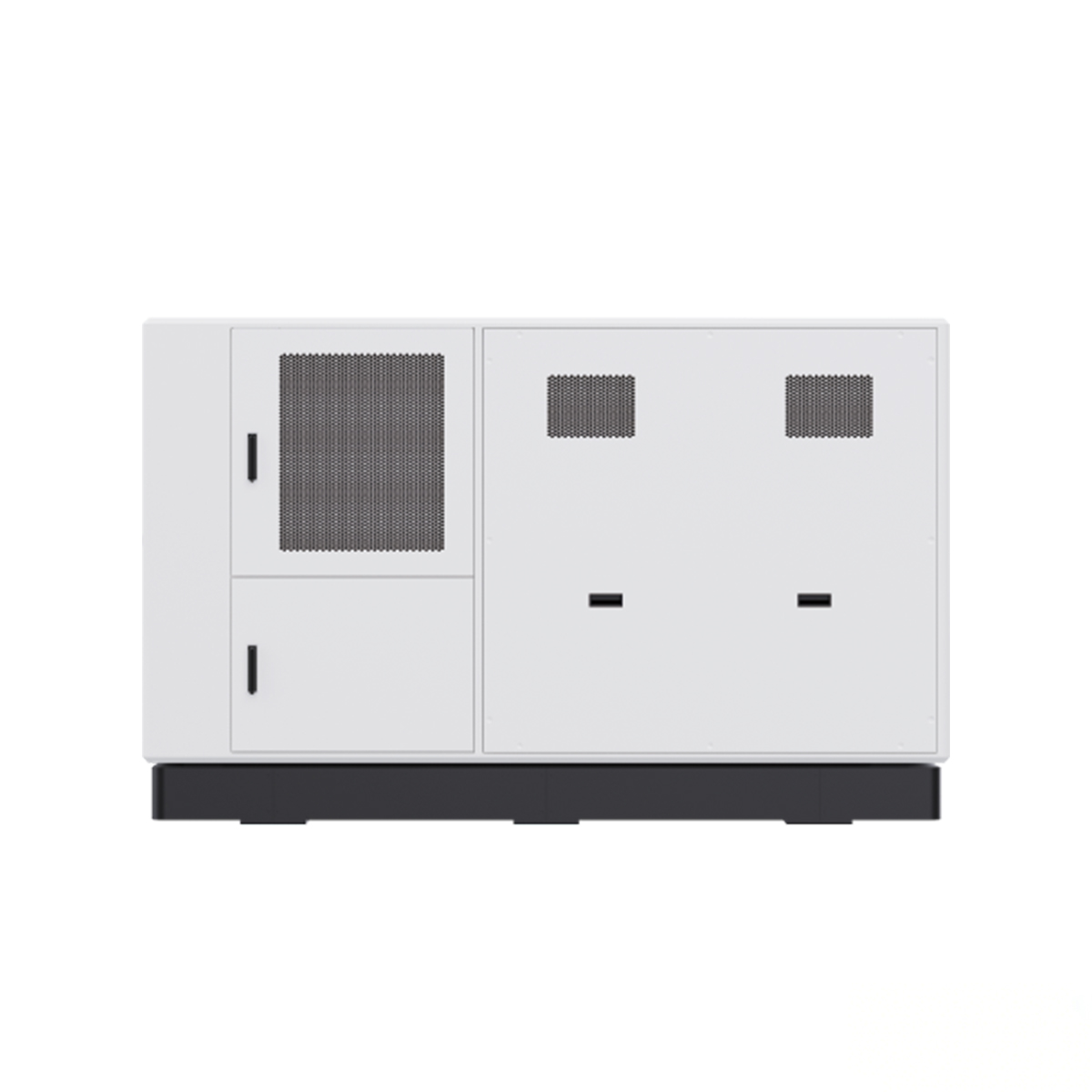
Electrifying commercial fleets demands massive power. Facility managers face enormous hurdles when transitioning depots. Traditional infrastructure deployments hit severe bottlenecks. Grid capacity limits stall essential projects. Lengthy utility upgrades cause operational delays. Outages cripple unresilient charging networks. A mobile battery energy storage system bridges this critical gap. It buffers immediate fleet demands against long-term grid realities. You will discover how these mobile solutions bypass infrastructure bottlenecks. We will explore their dual role as rapid-deployment emergency assets. Finally, you will learn to evaluate key technical standards for seamless, grid-independent implementation.
Key Takeaways
Grid-Independent Deployment: Mobile BESS enables rapid deployment of high-power EV charging without waiting for utility grid upgrades.
Dual-Value Generation: Functions simultaneously as an EV fast charging system for daily fleet operations and a portable microgrid for emergency disaster response.
Chemistry Matters: Lithium Iron Phosphate (LiFePO4) battery systems offer the required thermal stability and cycle life to justify the ROI of heavy-duty mobile applications.
Compliance is Critical: Procurement must prioritize NFPA fire safety standards, transport weight limits, and ruggedized environmental ratings.
The Business Case: Bypassing Grid Bottlenecks with Battery-Buffered Solutions
High-power DC fast charging requires substantial physical infrastructure. Local grids rarely support these massive loads immediately. Trenching cables takes months of planning. Securing municipal permits adds severe delays. Upgrading local transformer capacities completely halts deployment timelines. Fleet operators cannot wait for these sluggish utility upgrades. Vehicles need power today to maintain delivery schedules.
Battery-buffered solutions solve this exact infrastructure lag. Mobile units draw continuous, low-power energy from the grid. They can also charge from local renewable sources. They store this energy efficiently within internal cell modules. During charging sessions, they discharge it at high power directly to the vehicle. This active buffering flattens peak demand curves automatically. It shields local grids from sudden stress spikes. You avoid drawing massive utility power simultaneously.
Asset utilization heavily favors mobile deployment over fixed installations. Permanent charging stations often sit idle for long periods. Vehicles leave depots for hours. Fixed infrastructure cannot adapt to these schedules. Mobile units provide distinct flexibility. You can relocate them based on shifting fleet demands. Transit depots use them overnight to prep buses. Temporary event sites use them during the day to support crowds. They follow the demand rather than waiting for it.
Dual-Use Architecture: EV Fast Charging System Meets Emergency Power
Modern fleets require versatile hardware architectures. An EV fast charging system must handle intense operational loads while doubling as a critical backup. Relying on single-purpose hardware restricts operational agility.
Heavy-duty commercial vehicles demand massive energy output. Delivering 150kW or more requires robust power electronics. Mobile systems meet these high-capacity requirements reliably. They push dense energy into large battery packs quickly. Software integration proves equally critical for fleet operations. Depot managers need real-time data regarding charger status. OCPP (Open Charge Point Protocol) compliance ensures seamless communication. Fleet management software talks directly to the mobile unit. You monitor charge states, dispatch schedules, and system health effortlessly.
Grid resiliency forms the second core pillar of this architecture. Blackouts disable conventional chargers instantly. Mobile systems function as portable microgrids during these outages. They utilize V2G (Vehicle-to-Grid), V2H (Vehicle-to-Home), and V2B (Vehicle-to-Building) concepts. Islanding capabilities allow them to operate independently from the main utility feed. They sustain critical loads when the broader network fails.
Disaster relief teams rely heavily on this independence. Legacy diesel generators produce extreme noise and toxic exhaust. Mobile battery units provide zero-emission, silent power. They keep field hospitals and communication towers online during hurricanes. Roadside fleet rescue presents another powerful application. Stranded commercial EVs normally require heavy-duty towing logistics. A dispatched mobile unit charges the vehicle directly on-site. You eliminate towing complications and restore vehicle mobility instantly.
Evaluating Mobile Integrated Energy Storage And Charging Equipment
Selecting the right Mobile Integrated Energy Storage And Charging Equipment requires balancing internal capacity and physical footprint. Organizations must evaluate transportability against total energy needs. A 100kWh system fits completely different constraints than a 1000kWh+ system. You must analyze your physical space limits before selecting a capacity tier.
We classify physical form factors into three primary categories. This framework helps you match capacity to deployment reality.
Form Factor
Typical Capacity Range
Primary Applications
Mobility Level
Van-Integrated
50kWh - 150kWh
Roadside rescue, urban top-ups
Very High (Drivable)
Trailer-Mounted
200kWh - 600kWh
Emergency response, event charging
High (Towable)
Skid-Mounted
500kWh - 1000kWh+
Fixed depots, seasonal fleet shifts
Low (Requires forklift or crane)
Inverters and power electronics dictate system performance entirely. Bidirectional power flow remains essential for microgrid applications. AC/DC conversion efficiency determines how much usable energy actually reaches the vehicle. High-quality inverters minimize thermal loss during these conversions. Simultaneous multi-vehicle charging demands sophisticated power sharing. The electronics must dynamically route power based on each vehicle's acceptance rate. Older vehicles may only accept 50kW, while newer trucks absorb 150kW. The system routes power smartly to maximize throughput.
Environmental and ruggedization standards protect your mobile asset. Road transport subjects equipment to continuous shock and intense vibration. Chassis design must absorb these kinetic impacts safely. IP-ratings determine resistance to dust and moisture ingress. High-capacity operations generate significant ambient heat. Active HVAC liquid cooling prevents cell degradation during extreme weather operations. Fans and radiators cycle fluid around the cells to maintain strict temperature bands.
Why the LiFePO4 Battery System is the Industry Standard for Mobility
Chemical stability dictates safety in mobile applications. A LiFePO4 battery system significantly outperforms traditional NMC (Nickel Manganese Cobalt) chemistries in rugged environments. LiFePO4 contains exceptionally strong covalent bonds. It resists thermal runaway under severe stress. Punctures or extreme impacts rarely cause catastrophic fires. Mobile environments demand this baseline chemical safety. Engineers prioritize stability over sheer energy density when dealing with public deployments.
Cycle life heavily influences long-term equipment viability. Heavy-duty charging involves intense high C-rate discharging. NMC batteries degrade quickly under these harsh cyclic conditions. We see LiFePO4 systems deliver 3,000 to 6,000 deep cycles reliably. This longevity provides predictable performance over a multi-year operational lifespan. The degradation curve remains remarkably flat during the first several thousand cycles. You retain maximum capacity longer, ensuring fleets get the mileage they expect.
Engineering mitigates inherent chemical trade-offs transparently. LiFePO4 possesses a slightly lower energy density than NMC. It requires a heavier physical footprint to hold the same total energy. Engineers address this mass limitation through precise structural optimization.
Implementation Realities, Safety Compliance, and Deployment Risks
Deploying heavy-duty lithium-ion systems requires strict regulatory adherence. You cannot move massive battery banks without federal oversight. Department of Transportation (DOT) and international transport regulations govern these movements strictly. Operators must secure proper hazmat classifications for over-the-road transport. Weight limits vary across municipalities. Trailer-mounted units must fall within standard axle limits to avoid special permit delays.
Fire safety protocols demand uncompromising attention. Mobile deployments must align strongly with NFPA 855 principles. This standard governs the installation of stationary energy storage. Its core safety principles apply heavily to mobile variants as well. Manufacturers must include redundant safety mechanisms. Built-in aerosol or inert gas fire suppression systems detect and neutralize threats instantly. Emergency stop (E-stop) architectures physically sever the power connection. They isolate the battery from the main inverter during critical electrical faults.
We must acknowledge specific operational limitations frankly. Planners often overlook parasitic loads. The battery consumes its own energy to power internal thermal management systems. Heating the pack in extreme cold depletes available capacity. Cooling it during intense summer heat does the exact same thing. You must account for this energy loss during capacity planning.
Follow this structured process to minimize deployment risks:
Verify DOT weight class restrictions for your planned transport vehicles.
Audit the intended deployment zone for proper ventilation and physical clearance.
Test the E-stop and emergency fire suppression triggers mechanically.
Calculate localized parasitic loads based on seasonal temperature extremes in your region.
Procurement Logic: Shortlisting Vendors and Next Steps
Vetting OEMs requires looking past baseline specifications. Many manufacturers excel at stationary storage. Mobile applications demand a completely different engineering approach. You need vendors with a proven track record specifically in mobile environments. Their designs must account for continuous road vibration. Evaluate their local maintenance networks thoroughly. Hardware will eventually require field servicing. Local technicians prevent extended operational downtime. Scrutinize warranty terms carefully. Ensure the warranty covers both the battery cells and the sensitive power electronics.
Pilot programs validate theoretical performance effectively. Never jump straight to a massive fleet-wide rollout. Start with a single-unit pilot deployment. This isolation allows you to test actual energy throughput. You can verify software integration with your existing depot management tools. Depot staff can refine operational workflows safely. Drivers learn the plug-in procedures without pressure.
Your immediate next action focuses on current grid limitations. Audit your facility's peak demand limits accurately. Identify exactly where utility bottlenecks constrain your fleet expansion. Request a customized Spec Sheet from a qualified engineering team. Use this technical data to map out a phased, battery-buffered expansion strategy.
Conclusion
Mobile energy storage bypasses lengthy utility delays for incredibly rapid deployment.
These systems serve dual roles, providing high-power fleet charging and critical emergency backup.
LiFePO4 chemistry guarantees the thermal stability and long cycle life required for rugged operations.
Strict adherence to NFPA standards and transport regulations ensures secure, scalable implementation.
Organizations face a clear choice in infrastructure development. You can wait years for grid upgrades or deploy agile solutions today. Adopting battery-buffered mobile infrastructure ensures immediate operational continuity. This strategy allows fleets to scale aggressively and outpace competitors constrained by legacy power grids.
FAQ
Q: What is the typical lifespan of a mobile BESS used for daily EV fast charging?
A: A mobile unit utilizing LiFePO4 chemistry typically lasts between 7 and 10 years. This longevity translates to roughly 3,000 to 6,000 cycles depending on environmental usage. Proper Depth of Discharge (DoD) practices, such as keeping cycles between 10% and 90%, significantly extend cell life during heavy-duty fleet operations.
Q: Do mobile energy storage systems require special permits to operate?
A: They bypass many permanent installation permits, such as extensive utility interconnection approvals. However, operators still need to comply with local fire marshal regulations regarding placement. Transporting these massive batteries requires strict adherence to DOT hazmat guidelines and specific vehicle weight restrictions.
Q: Can a mobile integrated energy storage system be charged using solar power?
A: Yes. Most modern units accept versatile inputs. They feature deep AC/DC compatibility and integrate easily with microgrids. Built-in MPPT (Maximum Power Point Tracking) charge controllers optimize solar inputs, allowing the battery to harvest and store renewable energy directly from solar arrays.
A: Extreme temperatures activate the system's thermal management. Active liquid cooling prevents overheating during summer, while internal heaters maintain proper cell chemistry in winter. These processes create a parasitic load. The battery uses some of its own energy to regulate temperature, slightly reducing available charging capacity.